Last updated: July 22, 2026
Quick Answer: The top crypto narratives to watch in 2026 center on institutional adoption, stablecoin expansion, real-world asset tokenization, AI integration, and decentralized physical infrastructure. These themes are not speculative hype cycles, they reflect structural shifts in how capital flows into and through blockchain networks. Investors who understand which narratives have real utility behind them are better positioned to separate durable trends from short-lived noise.
Key Takeaways
- Crypto in 2026 is increasingly driven by institutional capital and regulated products, not retail speculation cycles [2][8]
- Stablecoin supply has surpassed approximately $280 billion and could exceed $1 trillion by end of 2026, making stablecoins a core infrastructure layer [7][14]
- Real-world asset (RWA) tokenization has moved from experiment to active deployment by regulated institutions [2][14]
- AI integration with blockchain is creating new token categories and on-chain agent economies [4][5]
- Decentralized Physical Infrastructure Networks (DePIN) are attracting serious capital as a bridge between digital and physical utility [1][4]
- Regulatory clarity in the US and EU is accelerating institutional entry and reducing market uncertainty [3][8]
- Not all narratives survive contact with reality, understanding which ones have execution behind them is critical [5][9]
- Staying updated requires following on-chain data, institutional reports, and narrative trackers rather than social media alone [4][9]
What Are Crypto Narratives and Why Do They Matter
A crypto narrative is a shared story or theme that drives investor attention, capital allocation, and project development within a specific sector of the market. Narratives matter because they shape where money flows before fundamentals are fully established.
In practice, a narrative like “AI tokens” or “RWA tokenization” signals to the market that a category has momentum. Projects aligned with that narrative attract liquidity, developer activity, and media coverage, which in turn reinforces price action. Understanding the top crypto narratives to watch in 2026 is one of the most direct ways to anticipate where speculative and institutional capital will move next. [1][4]
The key distinction: A narrative backed by real usage data and institutional deployment is structurally different from one built purely on social media hype. Both can move prices, but only one tends to sustain gains.
What Are the Biggest Crypto Trends Expected in 2026
The biggest crypto trends in 2026 are defined by institutional infrastructure, stablecoin dominance, tokenized real-world assets, AI-blockchain convergence, and regulatory normalization. These are not independent themes, they reinforce each other.
Multiple institutional outlooks describe 2026 as the transition point from a retail-driven four-year cycle to a structurally mature market dominated by asset managers, corporate treasuries, and regulated products [6][8]. The primary shift is from speculation to execution: building the rails that connect crypto with traditional finance.
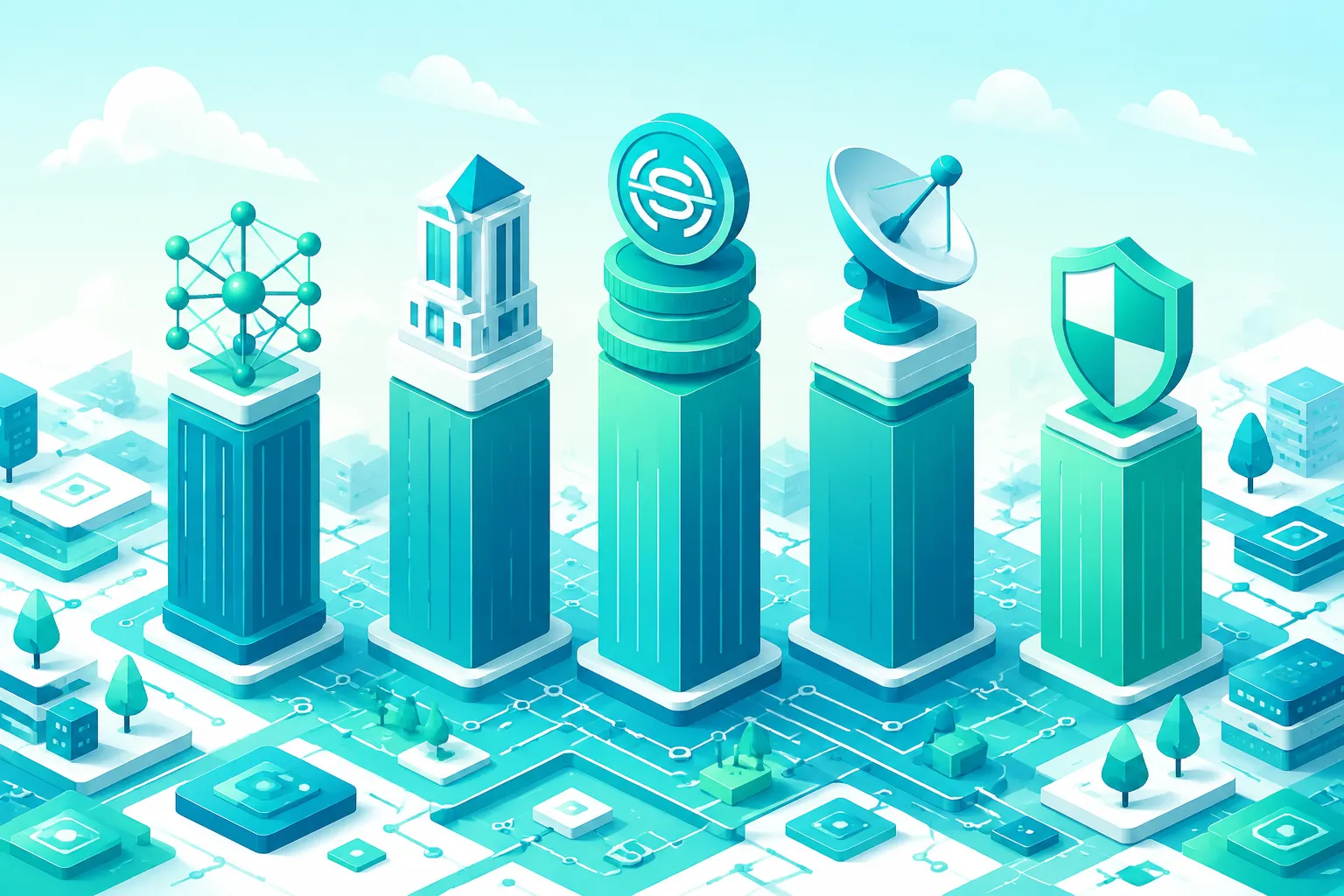
The five narratives with the strongest structural backing:
- Stablecoins and stablechains, payment infrastructure, collateral, and on-chain savings
- Real-world asset (RWA) tokenization, bonds, credit, real estate, and treasuries on-chain
- AI integration, autonomous agents, AI-linked tokens, and on-chain AI compute markets
- DePIN (Decentralized Physical Infrastructure Networks), tokenized physical networks covering wireless, storage, and energy
- Regulatory clarity plays, projects and chains positioned to benefit from clearer legal frameworks
How Will Bitcoin and Ethereum Evolve in 2026
Bitcoin in 2026 is increasingly functioning as institutional reserve collateral rather than a retail trading asset. Corporate treasury adoption, ETF inflows, and sovereign-level interest have shifted Bitcoin’s narrative from “digital gold speculation” to a recognized macro hedge in diversified portfolios [2][6][8].
Ethereum’s evolution centers on its role as the settlement layer for RWA tokenization and stablecoin activity. With most tokenized treasury products and institutional DeFi protocols deployed on Ethereum or Ethereum-compatible chains, ETH’s value proposition in 2026 is tied directly to institutional transaction volume rather than retail DeFi speculation [3][9].
Choose Bitcoin if your primary goal is macro exposure and store-of-value positioning. Choose Ethereum exposure if you want direct access to the RWA and stablecoin infrastructure narratives.
What’s Driving Crypto Adoption in 2026
Crypto adoption in 2026 is driven by three converging forces: regulatory clarity, institutional product availability, and real-world utility that extends beyond speculation.
The passage of clearer crypto legislation in the US and the implementation of MiCA regulations in the EU has removed significant legal uncertainty for institutional participants [3][8]. This has allowed asset managers, banks, and payment companies to deploy capital and build products that were previously on hold. At the same time, stablecoins have become a practical tool for cross-border payments, trade settlement, and corporate treasury management, use cases that don’t require any belief in crypto as an investment [4][14].
What’s not driving adoption: Meme coins, NFT speculation, and metaverse land sales have largely faded as primary narratives. The 2026 market rewards utility, not novelty.
Are There New Blockchain Use Cases Emerging in 2026
Yes. The most significant new use cases in 2026 include on-chain AI agent economies, tokenized private credit markets, and decentralized physical infrastructure. These go beyond the DeFi and NFT categories that defined earlier cycles.
Emerging use cases worth watching:
- On-chain AI agents that hold wallets, execute trades, and pay for compute autonomously
- Tokenized private credit allowing retail and institutional investors to access previously illiquid debt markets
- DePIN networks providing real-world services (wireless coverage, storage, energy) and compensating participants with tokens
- Prediction markets gaining mainstream traction as a verifiable, on-chain alternative to traditional forecasting platforms [1][4][5]
How Does AI Integration Affect Crypto in 2026
AI integration is one of the top crypto narratives to watch in 2026 because it creates entirely new token demand drivers. AI agents need on-chain wallets to pay for services, which drives stablecoin and gas token demand. AI compute marketplaces tokenize GPU access, creating a new asset class.
Projects in the AI-crypto intersection fall into two categories: infrastructure (compute, storage, data verification) and application (autonomous trading agents, AI-powered DeFi protocols). Infrastructure plays tend to have more durable fundamentals because they serve a real resource market. Application plays are higher risk and more narrative-dependent [4][5].
Common mistake: Buying any token with “AI” in its name without checking whether the project has actual AI compute demand or just branding.
What Regulatory Changes Are Coming for Crypto in 2026
Regulatory clarity is not a narrative in itself, it’s the condition that enables other narratives to scale. In 2026, the most impactful regulatory developments include US stablecoin legislation, SEC guidance on token classifications, and full MiCA implementation across the EU [3][7][8].
For investors, clearer rules mean two things: more institutional products (ETFs, tokenized funds, custodied assets) and higher compliance costs for projects operating in grey areas. Projects that built compliance infrastructure early are better positioned to capture institutional flows.
Which Altcoins Should I Watch in 2026
Rather than naming specific tokens (which change rapidly), the more durable framework is to watch altcoins aligned with the structural narratives above. Projects with real revenue, active developer communities, and institutional partnerships within RWA, stablecoin infrastructure, AI compute, or DePIN categories have the strongest fundamental backing [1][4][9].
Decision rule: If an altcoin’s primary value proposition is narrative association alone (no revenue, no users, no institutional backing), treat it as high-risk speculation regardless of how compelling the story sounds.
Is Crypto a Good Investment in 2026
Crypto in 2026 offers a wider range of risk profiles than in previous cycles. Institutional-grade products like Bitcoin ETFs, tokenized treasury funds, and regulated stablecoin yields represent lower-risk entry points compared to speculative altcoin trading [2][7][8].
Whether crypto is a “good investment” depends entirely on risk tolerance, time horizon, and which part of the market you’re accessing. The structural bull case for 2026 rests on institutional capital inflows and real-world utility, not on a repeat of retail-driven parabolic cycles [6][9].
What’s the Difference Between Hype and Real Crypto Narratives
Real narratives have on-chain data, institutional deployment, or measurable user activity behind them. Hype narratives have social media volume, influencer promotion, and price action, but no underlying utility growth.
The fastest way to distinguish them: check total value locked (TVL), transaction volume, developer commits, and whether regulated institutions are deploying capital. If a narrative is trending on social media but has no on-chain footprint, it’s hype [1][5][9].
Which narratives flopped that people expected to succeed: The metaverse land boom, most NFT collections as long-term stores of value, and several Layer-1 “Ethereum killers” that promised high throughput but never attracted sustainable developer ecosystems. These are useful reference points for applying skepticism to 2026’s emerging themes.

How Accurate Are 2026 Crypto Predictions
Directional predictions about crypto narratives are more reliable than price predictions. Analysts who correctly identified the institutional adoption narrative, stablecoin growth, and RWA tokenization as 2026 themes in late 2025 were broadly right about the direction, even if specific price targets were off [8][9].
Price predictions in crypto have a poor track record. Narrative predictions, when grounded in on-chain data and institutional behavior, are more actionable. The mistake most people make is treating a narrative prediction as a price target.
How Do I Stay Updated on Crypto Narratives Throughout 2026
The most reliable way to stay current is to combine on-chain data tools, institutional research reports, and curated narrative trackers rather than relying on social media or influencer commentary.
Practical sources to monitor:
- On-chain analytics platforms (track TVL, stablecoin flows, wallet activity)
- Institutional research from asset managers and exchanges publishing quarterly outlooks [2][8]
- Narrative tracking tools that categorize token performance by sector [1][4]
- Regulatory news feeds covering SEC, CFTC, and EU MiCA developments
Set a monthly review cadence. Narratives shift over quarters, not days, daily social media monitoring creates noise without signal.
FAQ
What is a crypto narrative? A crypto narrative is a shared investment theme that drives capital and attention toward a specific sector of the blockchain market. Examples include RWA tokenization, AI integration, and DePIN.
Which crypto narrative is strongest in 2026? Stablecoin infrastructure and RWA tokenization have the strongest institutional backing in 2026, supported by real deployment data and regulatory frameworks [2][14].
How much has stablecoin supply grown? Aggregate stablecoin supply surpassed approximately $280 billion as of early 2026, with projections suggesting it could exceed $1 trillion by end of year [7][14].
Is Bitcoin still relevant in 2026? Yes. Bitcoin’s narrative has shifted to institutional reserve asset and macro hedge, supported by ETF products and corporate treasury adoption [6][8].
What is DePIN in crypto? DePIN stands for Decentralized Physical Infrastructure Networks. These are blockchain projects that tokenize and incentivize real-world infrastructure like wireless networks, data storage, and energy grids [1][4].
Are AI crypto tokens worth investing in? AI tokens with real compute demand or on-chain agent utility have stronger fundamentals than those with only branding. Due diligence on actual usage is essential before investing [5].
What caused past crypto narratives to fail? Most failed narratives lacked real user adoption, had no sustainable revenue model, or depended on continuous new capital rather than organic utility. The metaverse and most NFT collections are clear examples [9].
How do I find projects aligned with top 2026 narratives? Use on-chain analytics platforms and sector-based token screeners that categorize projects by narrative. Cross-reference with institutional research for validation [1][8].
What is RWA tokenization? RWA tokenization means representing real-world assets, like government bonds, real estate, or private credit, as tokens on a blockchain, making them tradable and programmable [2][14].
Is 2026 a retail or institutional crypto market? 2026 is primarily institutional. Multiple analyst reports describe it as the end of the classic retail-driven four-year cycle and the beginning of a structurally mature, institution-led market [6][8].
Can regulatory clarity hurt crypto? Clarity can hurt projects operating in grey areas while benefiting compliant ones. Overall, most analysts view regulatory clarity as a net positive for long-term adoption [3][7].
How often do crypto narratives change? Major narratives typically shift over quarters to years. Micro-narratives (short-term hype themes) can cycle in weeks. Tracking both requires different tools and time horizons [4][9].
Conclusion
The top crypto narratives to watch in 2026 are not guesses, they are identifiable structural trends backed by capital flows, on-chain data, and institutional deployment. Stablecoins are becoming the internet’s payment layer. RWA tokenization is moving from pilot to mainstream. AI integration is creating new token demand categories. DePIN is bridging digital incentives with physical infrastructure. And regulatory clarity is finally giving institutions the green light to participate at scale.
Actionable next steps:
- Audit your current crypto exposure against the five structural narratives above, identify which holdings have real utility backing and which are purely narrative plays
- Set up on-chain data alerts for stablecoin flows and TVL changes in RWA and AI sectors
- Read at least one institutional quarterly outlook per month to track how professional capital is positioning [2][8]
- Apply the hype-vs-reality test to any new narrative before allocating capital: look for on-chain activity, developer commits, and institutional involvement
- Review your portfolio quarterly rather than reacting to daily social media narratives
The investors who perform best in 2026 will be those who distinguish durable structural narratives from short-lived themes, and who act on data rather than momentum.
References
[1] Crypto Narratives – https://www.coingecko.com/learn/crypto-narratives [2] 2026 Crypto Market Outlook 200622345 – https://ca.investing.com/analysis/2026-crypto-market-outlook-200622345 [3] 248383 Crypto Market Outlook For 2026 Institutional Adoption – https://pintu.co.id/en/news/248383-crypto-market-outlook-for-2026-institutional-adoption [4] Biggest Crypto Narratives 2026 – https://www.kerberus.com/learn/biggest-crypto-narratives-2026/ [5] Crypto Narratives 2026 Ultimate Guide Retail – https://blog.alphamind.co/crypto-narratives-2026-ultimate-guide-retail/ [6] Binance – https://www.binance.com/en/square/post/35019064503353 [7] 2026 Crypto Predictions Bitcoin Stablecoins Clarity Etfs – https://qz.com/2026-crypto-predictions-bitcoin-stablecoins-clarity-etfs [8] 2026 Crypto Market Outlook Roundup Major Institutions – https://www.coingecko.com/learn/2026-crypto-market-outlook-roundup-major-institutions [9] Crypto In 2025 Review And 2026 Outlook – https://oakresearch.io/en/reports/markets/crypto-in-2025-review-and-2026-outlook [10] Binance – https://www.binance.com/en/square/post/33581528526161