Last updated: August 3, 2026
Quick Answer: In late July and early August 2026, two major crypto security events rattled the digital asset community: the IRS issued a formal warning about phishing scams using fake digital asset compliance letters, and Senator Cynthia Lummis’s X account was hacked on July 31, 2026, to promote a fraudulent Solana-based meme token. Both incidents highlight serious, escalating threats to crypto holders and public figures alike.
Key Takeaways
- The IRS warned crypto holders about a surge in phishing emails disguising themselves as official digital asset compliance notices.
- Phishing emails in this campaign request private keys, seed phrases, or threaten legal action to pressure victims into compliance.
- Senator Cynthia Lummis’s X (formerly Twitter) account was compromised on July 31, 2026, and used to promote a Solana meme token.
- The hack exploited Lummis’s public profile as a prominent pro-crypto legislator to lend credibility to the fraudulent token.
- Clicking a phishing link or buying a promoted meme token from a hacked account can result in significant financial and data loss.
- The IRS does not contact taxpayers via email, social media, or text message for compliance matters.
- Crypto holders should enable two-factor authentication (2FA), use hardware wallets, and never share private keys with anyone.
- Both incidents are part of a broader, documented trend of crypto-targeted social engineering attacks in 2026.
- Phishing emails should be reported to the IRS at [email protected] and to the Anti-Phishing Working Group (APWG).
What Is the IRS Phishing Warning in August 2026?
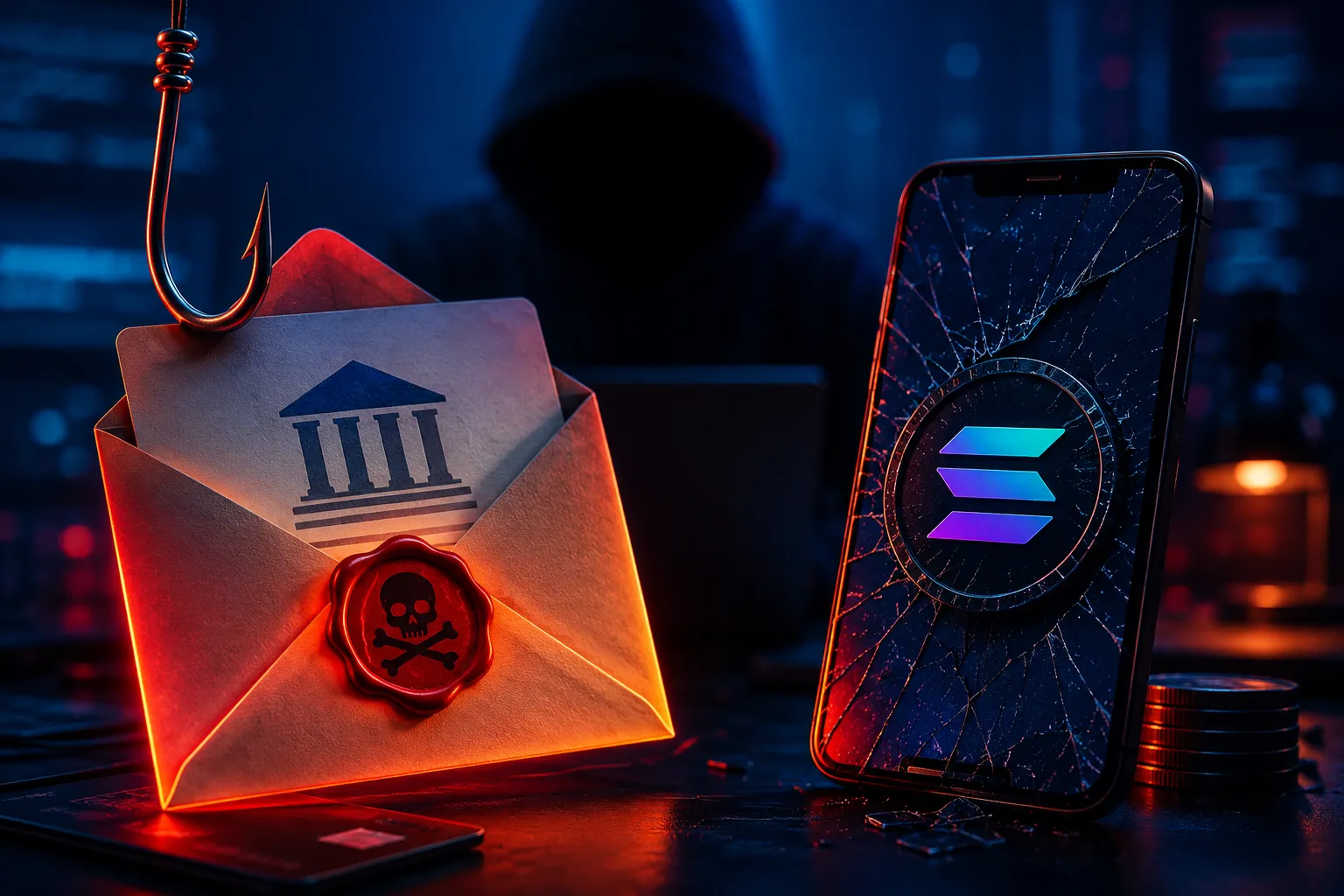
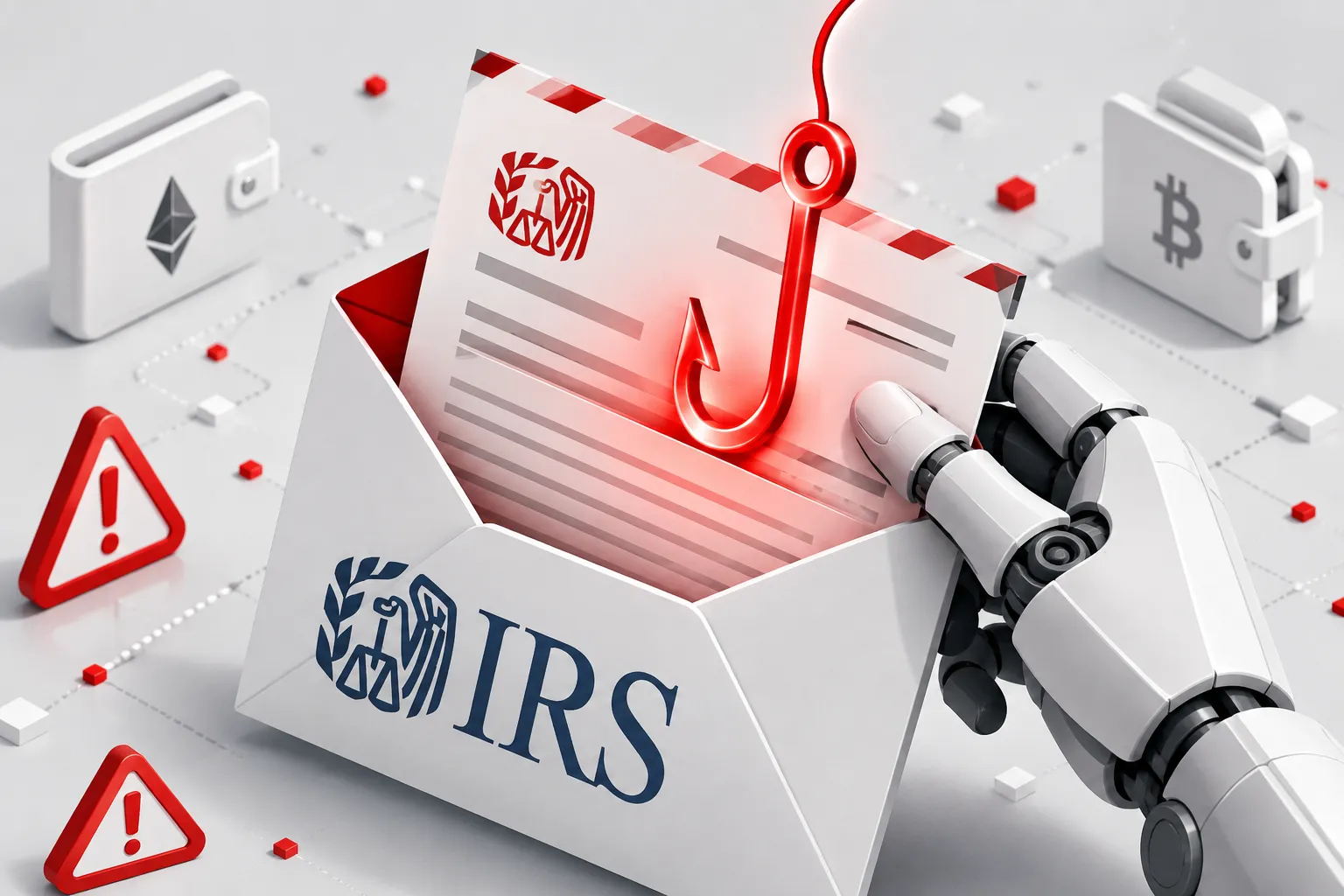
The IRS issued an official alert warning taxpayers about a new wave of phishing emails that impersonate IRS compliance notices related to digital assets. These fake letters claim recipients are under investigation for unreported cryptocurrency holdings and demand immediate action.
The scam emails typically include:
- A fake IRS letterhead or logo to appear official
- Language threatening audits, penalties, or criminal referrals
- Requests for private wallet keys, seed phrases, or login credentials
- Links to counterfeit IRS websites designed to harvest personal data
- Urgent deadlines designed to pressure victims into acting without thinking
Critical point: The real IRS never requests private keys, passwords, or seed phrases. The agency also does not initiate contact through email, text messages, or social media platforms for compliance or enforcement matters. All legitimate IRS correspondence arrives by postal mail.
Is the IRS Phishing Email Real or a Scam?
Any email claiming to be from the IRS about digital asset compliance is a scam. The IRS has confirmed it does not use email as a primary contact method for enforcement or compliance actions.
Signs that an IRS-branded email is fraudulent:
- It arrives via email rather than postal mail
- It requests cryptocurrency wallet information, private keys, or seed phrases
- It contains urgent language about criminal prosecution or asset seizure
- It links to a website that is not irs.gov
- It asks you to pay a fine using cryptocurrency or gift cards
If you receive such an email, do not click any links, download attachments, or reply with personal information.
What Does the IRS Phishing Email in August 2026 Actually Say?
Based on reports analyzed by cybersecurity researchers and the IRS alert, the phishing emails circulating in August 2026 follow a recognizable pattern. The message typically claims the recipient has failed to report cryptocurrency transactions and is now subject to a compliance review.
The body of the email usually:
- References specific tax years to appear credible
- Cites IRS code sections (often incorrectly) to seem authoritative
- Instructs the recipient to “verify” their digital asset holdings by submitting wallet addresses or private keys through a provided link
- States that failure to respond within 48 to 72 hours will result in account freezes or criminal referral
This combination of false authority and artificial urgency is a classic social engineering tactic designed to bypass rational decision-making.
Senator Lummis Crypto Hack: What Happened on July 31, 2026?
On July 31, 2026, the X account of Senator Cynthia Lummis (R-WY) was hacked and used to promote a fraudulent Solana-based meme token. Senator Lummis is one of the most prominent pro-crypto legislators in the United States, which made her account a high-value target for bad actors seeking to exploit her credibility.
Key facts about the incident:
- The hack occurred on July 31, 2026
- The attacker posted promotional content for a Solana meme token directly from her verified account
- The posts were designed to look like a genuine endorsement from a sitting U.S. senator
- Senator Lummis’s team confirmed the account was compromised and moved to regain control
- The fraudulent posts were deleted after the breach was identified
This type of attack, often called a “celebrity pump,” exploits the trust audiences place in verified, high-profile accounts to drive rapid token purchases before the price collapses.
How Did Hackers Get Into Senator Lummis’s Account?
The exact technical method has not been publicly confirmed as of this writing, but the attack is consistent with credential phishing or SIM-swapping, both of which are common vectors for high-profile social media account takeovers in 2026.
Likely attack vectors include:
- Credential phishing: A targeted email or message tricked someone with account access into entering login credentials on a fake site.
- SIM swapping: Attackers convinced a mobile carrier to transfer Lummis’s phone number to a SIM card they controlled, bypassing SMS-based 2FA.
- Third-party app compromise: An authorized third-party application connected to the account may have had its access token stolen.
The incident underscores that even public officials with security-conscious staff are not immune to sophisticated social engineering.
What Information Did Hackers Steal, and Were Bitcoin Holdings Exposed?
There is no confirmed public report indicating that Senator Lummis’s private financial data, bitcoin holdings, or personal identifying information was directly exfiltrated during the July 31 hack. The primary goal of the attackers appears to have been account access for promotional fraud rather than data theft.
Senator Lummis has publicly disclosed bitcoin holdings in congressional financial disclosures, as required by law, but those disclosures are part of the public record and were not newly “exposed” by this hack. Investors who bought the promoted meme token based on the fraudulent posts are the most likely financial victims of this specific incident.
Is My Crypto Exchange Account at Risk After the Lummis Hack?
The Lummis hack itself does not directly compromise individual exchange accounts. However, the incident is part of a broader threat environment that puts all crypto holders at elevated risk in August 2026.
Your exchange account is at greater risk if you:
- Reuse passwords across platforms
- Rely solely on SMS-based two-factor authentication
- Follow trading signals from social media without independent verification
- Have not reviewed your account’s authorized third-party app connections recently
Decision rule: If you purchased any token based on a social media post from a public figure in late July or early August 2026, check whether that account was reported as compromised before assuming the endorsement was genuine.
How to Protect Your Crypto Wallet After the August 2026 Security Alerts
The IRS phishing warning and the Lummis hack together point to the same underlying vulnerability: trust in digital communications can be exploited. The following steps apply to all crypto holders.
Immediate actions:
- Enable authenticator-app-based 2FA (not SMS) on all exchange and social media accounts.
- Move significant crypto holdings to a hardware wallet (cold storage) not connected to the internet.
- Never enter your seed phrase or private key into any website, app, or form.
- Review and revoke any third-party app permissions connected to your exchange accounts.
- Use a unique, strong password for every crypto-related account.
Ongoing practices:
- Verify any investment opportunity promoted on social media through official channels before acting.
- Set up account activity alerts on all exchanges.
- Regularly check HaveIBeenPwned or similar services to see if your email has appeared in data breaches.
What Should You Do If You Clicked the IRS Phishing Link?
Act immediately. Clicking a phishing link can install malware, steal credentials, or expose your device to keyloggers.
Steps to take right away:
- Disconnect the device from the internet.
- Run a full malware scan using reputable security software.
- Change passwords for all accounts accessed on that device, starting with email and crypto exchanges.
- Contact your bank and any financial institutions if you entered payment information.
- Enable 2FA on all accounts if not already active.
- Monitor your credit report for unusual activity.
If you entered a private key or seed phrase, assume that wallet is compromised. Transfer remaining funds to a new wallet immediately.
How to Report IRS Phishing Emails to Authorities
Reporting phishing emails helps authorities track and shut down scam operations. The process is straightforward.
- Forward the email to [email protected] (the IRS’s official phishing report address).
- Report to the APWG (Anti-Phishing Working Group) at [email protected].
- File a complaint with the FBI’s Internet Crime Complaint Center at ic3.gov.
- Report to your email provider using the built-in spam or phishing reporting tool.
Do not alter the email before forwarding it, as headers contain technical data useful to investigators.
Did the IRS Issue an Official Statement About the August 2026 Phishing Campaign?
Yes. The IRS issued an official alert warning taxpayers about the surge in digital asset-related phishing communications. The agency confirmed that it does not initiate contact via email for compliance or enforcement matters and urged anyone who receives such messages to report them and not respond.
The IRS also reiterated that legitimate digital asset tax guidance is available at irs.gov/virtualcurrency and that any genuine compliance notice will arrive by postal mail with a contact phone number for verification.
How to Verify If an IRS Email Is Legitimate
No legitimate IRS compliance or enforcement action begins with an email. This is the single most reliable rule for identifying IRS impersonation scams.
To verify any IRS communication:
- Call the IRS directly at 1-800-829-1040 using the number from irs.gov (not from the email).
- Log in to your IRS online account at irs.gov to check for any actual notices.
- Check whether the sender’s email domain is exactly @irs.gov (not @irs-gov.com or similar variations).
- Never use phone numbers, links, or addresses provided in a suspicious email.
Crypto Security Best Practices After the August 2026 Alerts
The combination of the IRS phishing campaign and the Lummis X hack reflects a maturing threat landscape where attackers target both individual holders and institutional trust simultaneously. The best defense is layered security.
| Threat Type | Primary Defense | Secondary Defense |
|---|---|---|
| IRS phishing email | Never respond to unsolicited emails | Report to [email protected] |
| Social media account hack | Authenticator-app 2FA | Verify endorsements via official sites |
| Meme token pump scam | Independent research before buying | Check if source account was hacked |
| Private key theft | Hardware (cold) wallet storage | Never enter seed phrase online |
| SIM swap attack | Remove SMS 2FA from all accounts | Use a dedicated security key (FIDO2) |
Frequently Asked Questions
Q: Does the IRS ever contact taxpayers by email about cryptocurrency? No. The IRS initiates all compliance and enforcement contact through postal mail. Any email claiming to be from the IRS about digital assets is a scam.
Q: What was the Solana meme token promoted from Senator Lummis’s hacked account? The specific token name has not been officially confirmed in public statements reviewed for this article. What is confirmed is that a fraudulent Solana-based meme token was promoted from her account on July 31, 2026, without her knowledge or consent.
Q: Can I get my money back if I bought the meme token promoted from a hacked account? Recovery is unlikely. Meme token pump-and-dump schemes move fast, and blockchain transactions are irreversible. If you sent funds to a fraudulent address, file a report with the FBI’s IC3 and your exchange’s fraud team, but do not expect a refund.
Q: Is Senator Lummis’s X account safe to follow now? Her team confirmed the account was recovered after the breach. However, always verify any investment-related content from any social media account through official government or news sources before acting on it.
Q: What is a SIM swap attack and how does it relate to crypto security? A SIM swap is when an attacker convinces a mobile carrier to transfer your phone number to their SIM card. This lets them receive your SMS verification codes, bypassing SMS-based 2FA on exchange and social media accounts. Using an authenticator app or hardware security key eliminates this vulnerability.
Q: How do I know if my email address was used in a phishing database breach? Visit HaveIBeenPwned.com and enter your email address. The free service checks your address against known data breach databases and alerts you to any exposures.
Q: Should I be worried about my crypto exchange account specifically because of the Lummis hack? The hack did not breach any exchange databases. Your exchange account is at risk only if you use weak passwords, SMS-based 2FA, or if your credentials were already exposed in an unrelated breach.
Q: What is the best 2FA method for protecting a crypto exchange account? A hardware security key (FIDO2/WebAuthn standard, such as a YubiKey) is the most secure option. An authenticator app (such as Google Authenticator or Authy) is the next best choice. SMS-based 2FA is the weakest option and should be replaced wherever possible.
Conclusion
The IRS Phishing Warning and Senator Lummis Hack: Crypto Security Alert August 2026 is not just a news story. It is a practical warning for every person who holds digital assets or interacts with financial institutions online. Two distinct but related threats emerged within days of each other: a coordinated phishing campaign exploiting IRS authority, and a high-profile social media compromise designed to defraud crypto investors through false endorsement.
Actionable next steps for crypto holders:
- Check your email accounts against known breach databases today.
- Replace SMS-based 2FA with an authenticator app or hardware key on all exchange and social media accounts.
- Move significant holdings to a hardware wallet if you have not already done so.
- Bookmark irs.gov/virtualcurrency as your only trusted source for IRS digital asset guidance.
- Report any suspicious IRS-branded emails to [email protected] immediately.
- Before acting on any investment tip from social media, verify the source account has not been reported as compromised.
The threat environment for crypto holders in 2026 is sophisticated and fast-moving. Consistent, layered security habits are the most reliable defense available.
References
- CryptoRank. (2026). IRS Issues Phishing Warning and Senator Lummis’ X Account Hacked to Promote Solana Meme Token. https://cryptorank.io/news/feed/02e96-crypto-regulation-sparks-crime-irs-issues-phishing-warning-lummis-gets-hacked
- Internal Revenue Service. Report Phishing and Online Scams. https://www.irs.gov/privacy-disclosure/report-phishing
- FBI Internet Crime Complaint Center. IC3 Home. https://www.ic3.gov
- Anti-Phishing Working Group. Report Phishing. https://apwg.org/reportphishing/