
Last updated: August 2, 2026
Quick Answer: July 2026 saw $210.3 million stolen across 30 major cryptocurrency hacking incidents, a 177% increase from June 2026, according to blockchain security firm PeckShieldAlert. [1][8] The surge was driven largely by DeFi protocol exploits and smart contract vulnerabilities. Investors should immediately audit their wallet security, move significant holdings to hardware wallets, and verify whether their platforms were among those affected.
Key Takeaways
- PeckShieldAlert confirmed $210.3 million was stolen in July 2026 across 30 major crypto hacking incidents. [8]
- Month-over-month losses jumped 177% compared to June 2026. [1]
- The first half of 2026 already recorded 212 incidents with over $1.1 billion stolen, making July’s spike part of a broader trend. [9]
- DeFi protocols, cross-chain bridges, and DAO governance systems were among the primary attack vectors in July. [3][10]
- Forbes reported that 2026 hacks reached $1.3 billion in the first half of the year, with attacks becoming fewer but more precise. [6]
- Hardware wallets and cold storage remain the strongest individual defense against exchange-level breaches.
- Stolen crypto can sometimes be traced on-chain, but recovery rates remain very low without law enforcement involvement.
- Crypto insurance products exist but coverage is limited and often excludes individual user negligence.

How Much Money Was Stolen in Crypto Hacks in July 2026
July 2026 crypto hacks resulted in $210.3 million in confirmed losses across 30 major incidents, according to PeckShieldAlert data. [8] That figure represents a 177% month-over-month increase from June 2026. [1]
To put that in context, the entire first half of 2026 recorded 212 hacking incidents totaling over $1.1 billion stolen. [9] July’s single-month total is therefore a significant acceleration, not an isolated event. Forbes noted that while the number of individual attacks in 2026 has trended lower compared to prior years, the financial damage per incident has grown sharply, suggesting attackers are becoming more selective and technically precise. [6]
Why this matters for investors: A single month accounting for roughly 19% of the H1 total signals that security vulnerabilities in the crypto ecosystem are not shrinking. Investors holding assets on centralized or DeFi platforms face real, measurable risk.
What Caused the Crypto Hacks in July 2026
The July 2026 surge was not caused by a single event but by a concentration of exploits targeting DeFi protocols, DAO governance mechanisms, and cross-chain bridge infrastructure. [3][10]
Key contributing factors include:
- Smart contract vulnerabilities: Poorly audited or unaudited DeFi protocols continue to be the most common entry point for attackers.
- DAO governance exploits: At least one high-profile July incident involved the Bonk DAO governance system, where attackers manipulated on-chain voting mechanisms. [3]
- Bridge protocol weaknesses: Cross-chain bridges, which move assets between blockchains, remain structurally complex and historically prone to large-scale exploits.
- Flash loan attacks: Attackers borrow large sums within a single transaction block to manipulate protocol prices, then repay the loan while keeping the profit.
“Fewer but far more surgical” is how Forbes described the 2026 hacking pattern, with attackers spending more time identifying high-value targets before striking. [6]
Common mistake: Many investors assume that because a protocol has been running for months without incident, it has been fully audited. That assumption is incorrect. Age alone does not equal security.
Which Crypto Platforms Were Hacked in July 2026
Multiple platforms were affected across the DeFi and DAO sectors in July 2026, with the Bonk DAO governance system among the named incidents. [3] PeckShieldAlert tracked 30 discrete major incidents across the month. [8]
Specific platform names for all 30 incidents have not been fully disclosed in public reporting at the time of publication. However, the pattern identified by security researchers points to:
- DeFi lending and liquidity protocols as the most frequently targeted category
- DAO treasury contracts where governance token manipulation enabled unauthorized fund withdrawals
- Smaller, newer protocols with limited audit histories
Decision rule: If a platform you use has not published a security audit from a recognized third-party firm within the past 12 months, treat it as higher risk regardless of its public reputation.
How Crypto Hacks Happen and What the Common Vulnerabilities Are
Crypto hacks exploit predictable weaknesses in code, protocol design, and human behavior. Understanding these attack types helps investors assess platform risk before committing funds.
The most common attack vectors in 2026:
| Attack Type | How It Works | Primary Target |
|---|---|---|
| Smart contract exploit | Attacker finds a flaw in contract logic | DeFi protocols |
| Flash loan attack | Manipulates prices within one transaction | AMMs, lending platforms |
| Bridge exploit | Intercepts assets during cross-chain transfer | Cross-chain bridges |
| Governance attack | Acquires enough voting tokens to pass malicious proposals | DAOs |
| Private key compromise | Phishing or malware steals wallet credentials | Individual users, hot wallets |
Most large-scale hacks in July 2026 fell into the first three categories. Individual investors are more commonly affected by private key compromise, which is entirely preventable with proper storage practices. [10]
Is My Crypto Exchange Safe After the July 2026 Hacks
Whether a specific exchange is safe depends on whether it was directly affected and what security infrastructure it maintains. The July 2026 incidents were concentrated in DeFi protocols and DAO systems rather than major centralized exchanges, but that does not mean centralized platforms are immune. [1][10]
Steps to assess your exchange’s safety:
- Check whether the platform issued a security statement in July or August 2026.
- Confirm the exchange holds proof-of-reserves and undergoes regular third-party audits.
- Verify that the platform carries any form of custodial insurance (FDIC does not cover crypto).
- Enable all available security features: two-factor authentication, withdrawal address whitelisting, and login alerts.
Edge case: Even exchanges not directly hacked can face liquidity pressure if a major hack triggers mass withdrawals across the sector. Monitoring on-chain reserves during high-volatility periods is a practical precaution.
How to Protect Your Crypto From Hacks
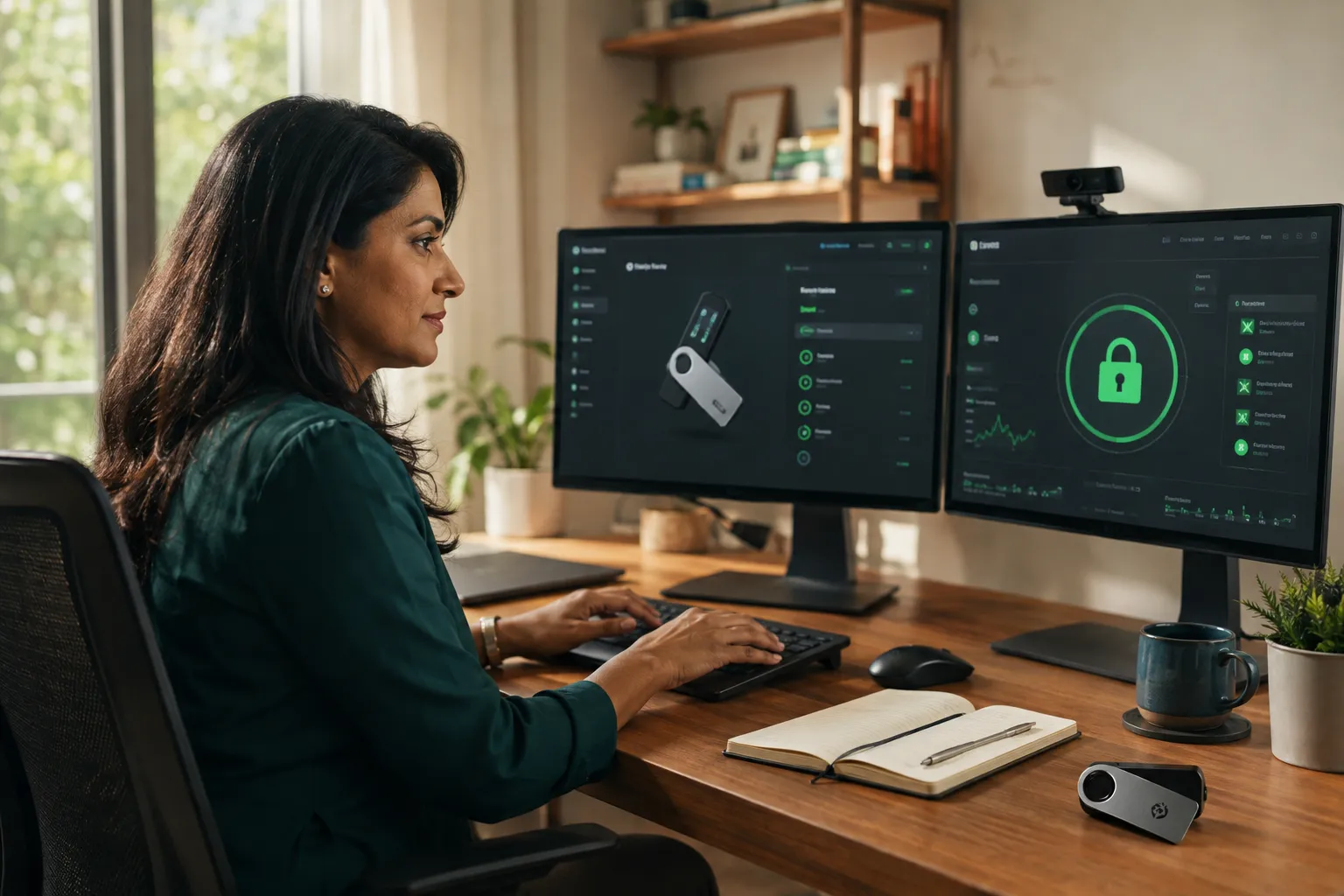
The most effective protection against crypto hacks is removing assets from internet-connected environments. Hardware wallets, also called cold wallets, store private keys offline and are not accessible to remote attackers.
Practical security checklist:
- Move long-term holdings to a hardware wallet (Ledger, Trezor, or equivalent).
- Never store seed phrases digitally. Write them on paper and store in a secure physical location.
- Use a dedicated email address for crypto accounts that is not linked to any other service.
- Enable two-factor authentication using an authenticator app, not SMS.
- Audit DeFi protocol approvals regularly using tools like Revoke.cash to remove permissions granted to unused contracts.
- Avoid connecting wallets to unverified DeFi platforms or clicking links in unsolicited messages.
Best crypto wallets to avoid getting hacked: Hardware wallets are the strongest option for significant holdings. For active DeFi users, a separate “hot” wallet funded only with what is needed for a specific transaction limits exposure if that wallet is compromised.
What Should You Do If Your Crypto Was Stolen in the Hack
If crypto was stolen in a July 2026 hack or any subsequent incident, act quickly because on-chain transactions are time-sensitive for any recovery attempt.
Immediate steps:
- Document everything: transaction IDs, wallet addresses involved, timestamps, and platform communications.
- Report to the platform immediately and request they flag the relevant addresses.
- File a report with the FBI’s Internet Crime Complaint Center (IC3) in the US, or the equivalent national cybercrime authority in your country.
- Report the incident to the blockchain analytics firms that track stolen funds (Chainalysis, Elliptic) if the platform does not do so automatically.
- Contact a crypto-focused attorney if the amount justifies legal action.
How to Report a Crypto Hack to Authorities
In the United States, crypto theft should be reported to the FBI IC3 (ic3.gov) and the CFTC or SEC depending on the asset type. In the UK, Action Fraud handles cybercrime reports. Most jurisdictions now have dedicated cybercrime units familiar with blockchain forensics.
Can stolen crypto be recovered or traced? Blockchain transactions are permanently recorded and publicly traceable. Firms like Chainalysis can often track stolen funds as they move through wallets and exchanges. However, recovery depends on whether the funds reach a regulated exchange that can freeze them. The overall recovery rate for stolen crypto remains low, but high-profile cases have seen partial recoveries when exchanges cooperated with law enforcement.
Will Crypto Prices Recover After the July 2026 Hacks
Historically, crypto markets have absorbed large hack events within weeks, though short-term price dips in affected tokens are common. The broader market impact of July 2026’s $210.3 million in losses depends on whether the incidents trigger regulatory responses or sustained loss of confidence in specific protocols. [1][6]
Tokens directly associated with hacked protocols typically see sharper and longer-lasting price declines. Blue-chip assets like Bitcoin and Ethereum have generally shown resilience following sector-wide security events, as investors rotate out of smaller, higher-risk protocols.
Investor decision rule: If a token’s primary protocol was exploited, treat it as a fundamentally impaired asset until the team publishes a credible post-mortem and remediation plan. Price recovery without a security fix is not a reliable signal.
Crypto Insurance Coverage for Hacked Accounts
Crypto insurance exists but covers far less than most investors assume. A small number of centralized exchanges carry custodial insurance policies that cover losses from external hacks, but these policies typically do not cover individual account compromises caused by phishing or user error.
DeFi protocol insurance is available through platforms like Nexus Mutual, which allows users to purchase coverage against specific smart contract failures. Coverage limits are set by the pool size, and claims require a governance vote to approve.
Key limitation: No crypto insurance product currently provides the broad, per-account protection that FDIC insurance provides for bank deposits. Investors should not rely on insurance as a primary security strategy.
How Often Do Crypto Hacks Happen
Crypto hacks are a near-daily occurrence at some scale. The first half of 2026 alone recorded 212 discrete incidents. [9] July 2026 added 30 major incidents in a single month. [8] The Bitcoin Foundation’s H1 2026 data confirms the frequency has remained high even as individual attack sophistication increases. [7]
Smaller exploits, phishing attacks, and rug pulls occur far more frequently than the major incidents that make headlines. Security firm monitoring services like PeckShieldAlert publish near-real-time alerts for significant on-chain anomalies, and following these accounts provides early warning of emerging threats.
Which Investors Were Most Affected by July 2026 Crypto Hacks
DeFi liquidity providers and DAO token holders were disproportionately affected in July 2026, based on the attack vectors identified. [3][10] These investors typically hold assets directly in protocol contracts rather than on centralized custodians, which means there is no intermediary to halt a transaction or freeze funds.
Retail investors who used smaller, less-audited DeFi platforms for yield farming faced the highest direct exposure. Institutional investors with custody arrangements through regulated entities had more structural protection, though they are not immune to protocol-level losses if they participate in DeFi directly.
FAQ
Q: Was the $210.3 million figure confirmed by an official source? A: Yes. PeckShieldAlert, a blockchain security monitoring firm, published the figure tracking 30 major incidents in July 2026. [8]
Q: Were any major centralized exchanges hacked in July 2026? A: The July 2026 incidents were concentrated in DeFi protocols and DAO governance systems. No major centralized exchange breach was confirmed in the available reporting. [1][10]
Q: What is the safest way to store crypto right now? A: A hardware wallet with the seed phrase stored offline is the strongest protection available to individual investors. Assets in cold storage cannot be accessed remotely.
Q: Can I get my money back if a DeFi protocol I used was hacked? A: Recovery is possible but unlikely without protocol-level compensation from the team or a successful law enforcement action. Some protocols have repaid users from treasury funds after exploits, but this is not guaranteed.
Q: Does my exchange’s insurance cover me if it gets hacked? A: Only if the exchange holds a custodial insurance policy that covers external hacks and your loss falls within the policy’s scope. Check your exchange’s terms of service directly. Most policies do not cover individual account compromises.
Q: Should I move assets off exchanges after the July 2026 hacks? A: For long-term holdings, moving to a hardware wallet reduces counterparty risk regardless of current events. For active trading, keeping only what is needed on an exchange limits exposure.
Q: Are Bitcoin and Ethereum safer than smaller tokens after a hack event? A: Bitcoin and Ethereum are not immune to market volatility following sector-wide hacks, but their underlying protocols were not among the July 2026 targets. They carry lower smart contract exploit risk than smaller DeFi tokens.
Q: How do I check if a DeFi protocol has been audited? A: Most reputable protocols publish audit reports on their official websites or GitHub repositories. Cross-reference with audit firms like CertiK, Trail of Bits, or OpenZeppelin to verify legitimacy.
Conclusion
The crypto hacks surge to $210M in July 2026 is a clear signal that security risk in the digital asset space remains high and is accelerating in financial impact. With 30 major incidents in a single month and a 177% jump from June, the pattern documented by PeckShieldAlert demands a practical response from every investor, not just those directly affected. [1][8]
Actionable next steps:
- Move long-term holdings to a hardware wallet this week. Do not wait for a breach to motivate action.
- Audit all active DeFi protocol approvals and revoke any permissions from platforms you no longer use.
- Confirm whether your primary exchange publishes regular proof-of-reserves and third-party security audits.
- Set up real-time alerts through PeckShieldAlert or similar services to receive early warning of new exploits.
- If you participate in DAO governance or DeFi liquidity pools, review the audit status and treasury security of each protocol you hold.
Security in crypto is not passive. The investors who fare best after events like the July 2026 surge are those who treated security as an ongoing practice rather than a one-time setup.
References
[1] Peckshield July Crypto Hacks Surpass 210m 177 Rise From June – https://www.kucoin.com/news/flash/peckshield-july-crypto-hacks-surpass-210m-177-rise-from-june
[3] July Crypto Hacks Bonk Dao Governance – https://coinalertnews.com/news/2026/08/01/july-crypto-hacks-bonk-dao-governance
[6] Fewer But Far More Surgical Crypto Hacks Hit 13 Billion In 2026 – https://www.forbes.com/sites/boazsobrado/2026/07/17/fewer-but-far-more-surgical-crypto-hacks-hit-13-billion-in-2026/
[7] Crypto Hacks H1 – https://bitcoinfoundation.org/news/crimes-and-fraud-news/crypto-hacks-h1/
[8] PeckShieldAlert – https://x.com/PeckShieldAlert/status/2083388287688049084
[9] Crypto Hacks Reach 212 Incidents Over 11 Billion Usd Stolen In H1 2026 – https://www.weex.com/news/detail/crypto-hacks-reach-212-incidents-over-11-billion-usd-stolen-in-h1-2026-bipoi6lcpcdjdcm7e6ye2yhs
[10] Crypto Hack July 2026 Biggest Defi Exploits Roundup – https://www.coingabbar.com/en/crypto-blogs-details/crypto-hack-july-2026-biggest-defi-exploits-roundup