Last updated: June 15, 2026
Quick Answer: Tokenized SpaceX shares hit crypto exchanges this week as platforms including Bybit, Kraken, and LBank launched products giving retail investors exposure to SpaceX equity through blockchain-based tokens. These tokens are designed to track SpaceX share value and are marketed as backed 1:1 by underlying equity, though investors do not receive actual SpaceX stock or shareholder rights. The launch coincided with SpaceX’s highly anticipated IPO, which drew roughly $150 billion in investor demand against a $75 billion target.
Key Takeaways
- Bybit, Kraken, and LBank all listed SpaceX-linked tokens (SPCX or SPCXx) this week, marking a major moment in asset tokenization.
- Kraken’s xStocks platform extended access to clients in over 110 markets, enabling 24/7 trading of tokenized SpaceX shares.
- Bybit and Kraken marketed their tokens as 1:1 backed by real SpaceX equity held in regulated broker-dealer custody.
- Binance, Bybit, and Bitget later canceled their SpaceX IPO token campaigns after the xStocks infrastructure failed to deliver underlying shares, leaving over $1 billion in customer orders unfilled.
- Tokenized shares do not typically grant voting rights, dividend entitlements, or direct ownership of the underlying company.
- Regulatory eligibility varies by jurisdiction, and some offerings are restricted to accredited or verified investors.
- SpaceX’s IPO attracted approximately double its target demand, underscoring why retail access to this offering generated so much excitement.
- The situation highlights both the opportunity and the operational risk of tokenized equity products on crypto platforms.
What Exactly Are Tokenized SpaceX Shares?
Tokenized SpaceX shares are blockchain-based digital tokens designed to represent economic exposure to SpaceX equity. Each token is intended to mirror the price movement of one SpaceX share, with the token issuer holding actual shares in custody through a regulated broker-dealer.
The key distinction: owning a tokenized share is not the same as owning a real share. Holders typically receive no voting rights, no direct dividend access, and no formal equity stake in SpaceX. What they get is price exposure, essentially a synthetic or custodial instrument that moves in line with the underlying stock’s value. [7]
This structure is common across tokenized equity products. The token exists on a blockchain, which allows it to be traded continuously, transferred across borders, and held in a crypto wallet rather than a traditional brokerage account.
Which Crypto Exchanges Are Actually Offering SpaceX Tokens?
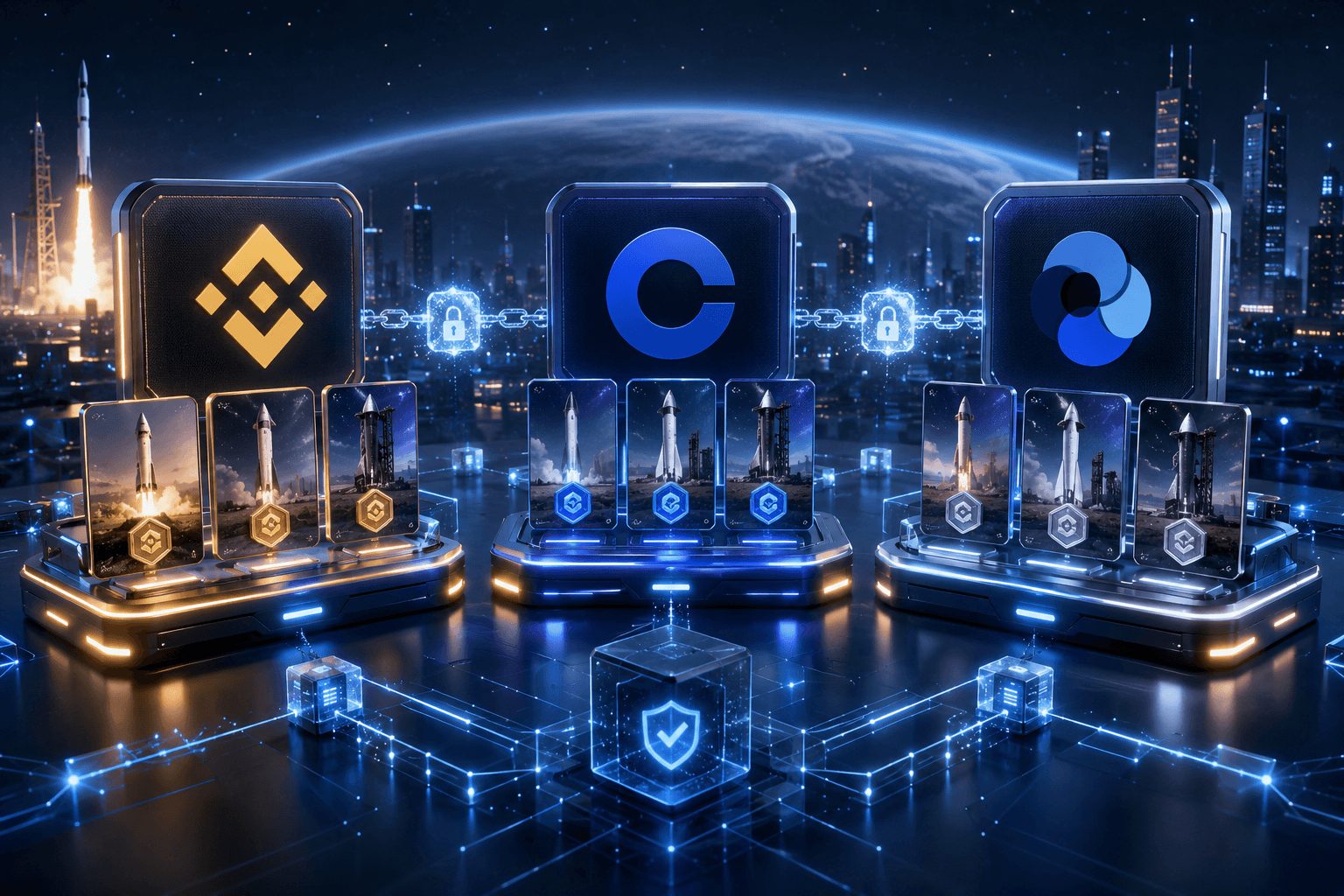
Three exchanges made headlines this week by listing SpaceX-related tokens, though the outcomes varied significantly.
Bybit launched its IPO Express platform, allowing eligible retail investors to subscribe to tokenized SpaceX shares (ticker: SPCX) between June 7 and June 11, with spot trading opening on June 12. The tokens were marketed as backed 1:1 by actual SpaceX equity held in regulated custody. [1]
Kraken offered tokenized SpaceX shares (ticker: SPCXx) through its xStocks IPO Access program to clients in more than 110 markets. Kraken positioned these as fully backed by underlying shares and tradable around the clock. [2]
LBank listed SPCXx on June 13, 2026, with deposits and trading beginning at 07:40 UTC and withdrawals enabled on June 14. [3]
However, the story took a sharp turn. Binance, Bybit, and Bitget all canceled their tokenized SpaceX IPO campaigns after xStocks, the infrastructure provider backing these tokens, failed to deliver the underlying shares. More than $1 billion in customer orders went unfilled as a result. [4]
What Is the Difference Between Real SpaceX Stock and These Tokens?
Real SpaceX stock and tokenized SpaceX tokens are fundamentally different instruments, even if their prices are meant to track each other.
| Feature | Real SpaceX Stock | Tokenized SpaceX Token |
|---|---|---|
| Ownership | Direct equity stake | Custodial/synthetic exposure |
| Voting rights | Yes (for applicable share classes) | No |
| Dividends | Eligible (if issued) | Not guaranteed |
| Trading hours | Market hours only | 24/7 on crypto exchanges |
| Custody | Brokerage account | Crypto wallet or exchange |
| Regulatory status | SEC-regulated security | Varies by jurisdiction |
| Delivery risk | Settled through DTCC | Dependent on token issuer |
The delivery failure that canceled over $1 billion in orders this week illustrates the most critical practical difference: traditional stock settlement operates through established clearinghouses, while tokenized equity depends entirely on the token issuer’s ability to source and hold the underlying shares. [4]
How Do Crypto Exchanges Let You Buy SpaceX Stock Tokens?
The process for purchasing tokenized SpaceX shares on a crypto exchange follows a few standard steps, though eligibility requirements vary by platform and location.
- Create and verify an account on a supported exchange (Kraken, for example, required KYC verification).
- Check eligibility based on your country of residence. Kraken’s xStocks program covered 110-plus markets, but certain jurisdictions were excluded.
- Fund your account with a supported stablecoin or fiat currency.
- Subscribe during the IPO window (Bybit ran subscriptions June 7-11) or buy on the open market once spot trading begins.
- Hold or trade the token as you would any other crypto asset, with the benefit of 24/7 market access. [1][2]
The underlying mechanism relies on a licensed broker-dealer purchasing actual SpaceX shares and issuing corresponding tokens on a blockchain. When a user sells their token, the issuer is theoretically able to redeem it against the held equity.
Is It Legal to Trade SpaceX Tokens?
Legality depends on the investor’s jurisdiction and the specific structure of the token offering. Tokenized shares that represent economic exposure to equity can fall under securities regulations in many countries.
Kraken’s xStocks program was designed to comply with applicable regulations across its supported markets, and Bybit similarly restricted access to eligible users based on jurisdictional rules. [2][7] However, regulatory frameworks for tokenized securities remain inconsistent globally. Some regulators treat these instruments as securities requiring full disclosure and registration; others have yet to issue clear guidance.
Investors in the United States, for instance, face particularly strict rules around trading unregistered securities. Anyone considering these products should verify whether their jurisdiction permits retail participation and whether the specific platform holds the necessary licenses.
Can Anyone Buy These SpaceX Crypto Tokens, or Just Accredited Investors?
Access varied by platform. Kraken extended its offering to retail clients across 110-plus markets, suggesting broader eligibility than traditional private equity access. [2] Bybit’s IPO Express platform was open to eligible retail investors, though geographic restrictions applied. [1]
Traditional SpaceX equity, by contrast, has historically been accessible only to institutional investors, venture capital firms, and accredited individuals through secondary private markets at very high minimums. Tokenized products were explicitly designed to close that gap, giving ordinary investors a way to gain price exposure to a company that had never been publicly traded.
That said, “eligible” does not mean “anyone.” Each platform applied its own KYC and residency requirements, and users in restricted jurisdictions (including some U.S. residents) were blocked from participating.
How Much Do SpaceX Share Tokens Cost?
Pricing for tokenized SpaceX shares was tied to the IPO valuation and subsequent market trading. SpaceX’s IPO attracted approximately $150 billion in investor demand against a $75 billion fundraising target, signaling that the company commanded an enormous implied valuation. [5]
Specific per-token prices at launch were not uniformly disclosed across all platforms, and secondary market prices fluctuated based on trading activity on each exchange. Because these tokens trade 24/7 on crypto platforms, their prices can diverge from the underlying share price during periods when traditional markets are closed, introducing a potential premium or discount.
Investors should treat any quoted price as a market price subject to liquidity conditions, not a guaranteed reflection of SpaceX’s actual share value.
What Risks Are Involved With Trading Tokenized SpaceX Shares?
The risks here are layered and, as this week demonstrated, very real.
Counterparty and delivery risk: The most immediate risk, already realized this week, is that the token issuer fails to source or deliver the underlying shares. Binance, Bybit, and Bitget canceled campaigns after xStocks could not deliver shares against more than $1 billion in orders. [4]
No ownership rights: Token holders have no voting rights, no direct claim on SpaceX assets, and no guaranteed dividend access. [7]
Regulatory risk: Tokenized securities operate in a shifting regulatory environment. A platform could be forced to delist or freeze tokens if regulators intervene.
Liquidity risk: Thinner order books on crypto exchanges compared to traditional stock markets can lead to wider bid-ask spreads and price slippage.
Platform risk: If an exchange is hacked, goes insolvent, or halts withdrawals, token holders may lose access to their positions.
Valuation divergence: Token prices can trade at a premium or discount to the actual underlying share price, particularly during off-hours.

How Do Tokenized Shares Compare to Traditional Stock Trading?
Tokenized shares offer genuine advantages in accessibility and trading flexibility, but they come with trade-offs that traditional brokerage accounts do not carry.
Traditional stock trading through a regulated broker gives investors direct ownership, SIPC protection (in the U.S.), access to corporate actions, and settlement through established clearinghouses. The process is slower and limited to market hours, but the infrastructure is battle-tested.
Tokenized shares allow 24/7 trading, borderless access, and fractional ownership without a traditional brokerage account. [6] For investors in markets where access to U.S. equities is difficult or expensive, this is a meaningful benefit. The trade-off is the counterparty and regulatory risk outlined above, plus the absence of standard investor protections.
Wall Street’s increasing integration with crypto infrastructure suggests these two worlds will continue to converge. Major financial institutions are already expanding their digital asset services, and tokenized securities are a natural extension of that trend. [6]
Will Elon Musk Support or Oppose Tokenized SpaceX Shares?
No public statement from Elon Musk or SpaceX directly addressing the tokenized share products launched this week has been confirmed. SpaceX itself has not issued an official endorsement or objection to these offerings as of this writing.
That matters because SpaceX has no formal role in the token issuance process. These products were created and marketed by third-party crypto exchanges and token infrastructure providers, not by SpaceX. The company receives no proceeds from secondary token trading and has no contractual relationship with token buyers.
If SpaceX were to formally object, the most likely avenue would be legal action against token issuers for unauthorized use of its brand or equity structure, or lobbying regulators to restrict such products. Whether that happens remains to be seen.
What Happens If SpaceX Itself Objects to These Tokens?
SpaceX’s potential objection could take several forms. The company could pursue trademark or brand infringement claims against exchanges using its name and logo in token marketing. It could also work with securities regulators to argue that these tokens constitute unregistered securities offerings tied to its equity.
From a practical standpoint, if SpaceX or regulators force exchanges to delist these tokens, holders would likely be left with a position they cannot easily exit. The underlying custodial shares might be liquidated and proceeds returned, but the timeline and process would depend entirely on the token issuer’s terms of service.
This is not a hypothetical concern. The delivery failure that already canceled over $1 billion in orders this week shows how quickly these products can unravel when the underlying infrastructure does not hold. [4]
Are Tokenized SpaceX Tokens a Good Investment?
Tokenized SpaceX shares offer exposure to one of the most anticipated IPOs in recent memory, but the events of this week demonstrate that the execution risk is substantial.
For investors who want SpaceX price exposure and accept the counterparty, regulatory, and liquidity risks outlined above, these tokens provide access that traditional markets do not. For investors who prioritize security, direct ownership, and established investor protections, the risks likely outweigh the benefits, particularly given that the primary infrastructure provider already failed to deliver shares against a billion dollars in orders.
A reasonable framework: consider tokenized shares only if the platform has demonstrated reliable custody arrangements, the offering is legally accessible in your jurisdiction, and you are treating it as a speculative position rather than a core holding.
Conclusion
Tokenized SpaceX shares hit crypto exchanges this week in what was simultaneously a landmark moment for retail access to private company equity and a cautionary tale about infrastructure readiness. Kraken, Bybit, and LBank all moved quickly to list products, but the collapse of xStocks’ delivery mechanism left more than $1 billion in orders canceled across Binance, Bybit, and Bitget, exposing the fragility beneath the headline.
Actionable next steps for interested investors:
- Verify whether tokenized SpaceX share products are legally available in your jurisdiction before placing any order.
- Confirm that any platform you use has independently verified custody arrangements for the underlying shares, not just a third-party provider’s promise.
- Treat these tokens as speculative instruments with meaningful counterparty risk, and size positions accordingly.
- Monitor regulatory developments closely, as securities regulators in multiple jurisdictions are actively reviewing tokenized equity products.
- Watch for SpaceX’s own response, which could affect the long-term viability of these products on crypto exchanges.
The broader trend toward asset tokenization is real and accelerating. But this week’s events are a reminder that access and safety are not the same thing.
FAQ
What are tokenized SpaceX shares? Tokenized SpaceX shares are blockchain-based tokens designed to track the price of SpaceX equity. They are issued by third-party platforms, not SpaceX itself, and do not grant ownership, voting rights, or dividends.
Which exchanges listed SpaceX tokens this week? Bybit, Kraken, and LBank all listed SpaceX-related tokens (SPCX or SPCXx) this week. Binance and Bitget also launched campaigns but later canceled them after the token infrastructure provider failed to deliver underlying shares.
Did the SpaceX token launches succeed? Partially. Kraken’s xStocks listing proceeded, but Binance, Bybit, and Bitget canceled their campaigns after xStocks failed to deliver shares against over $1 billion in customer orders.
Do tokenized SpaceX tokens give you real ownership of SpaceX? No. Token holders receive price exposure but not direct equity ownership, voting rights, or guaranteed dividend access.
Can U.S. retail investors buy these tokens? Access for U.S. investors is restricted on most platforms due to securities regulations. Investors should check their platform’s eligibility requirements and consult a financial or legal advisor.
How is the token price determined? Token prices are set by market supply and demand on the exchange, anchored to the underlying SpaceX share price. They can trade at a premium or discount, especially outside traditional market hours.
What happened to the $1 billion in unfilled SpaceX token orders? Binance, Bybit, and Bitget canceled their SpaceX IPO token campaigns after xStocks failed to source and deliver the underlying shares. Affected customers were expected to receive refunds of their subscribed funds.
Is this the first time crypto exchanges have offered tokenized stocks? No. Platforms including Binance previously offered tokenized stocks before regulatory pressure led to delistings. Kraken’s xStocks represents a newer, more structured attempt at the same concept.
What is xStocks? xStocks is a tokenized equity infrastructure platform that Kraken and other exchanges used to source and back SpaceX tokens with real underlying shares. Its failure to deliver shares triggered the cancellation of multiple exchange campaigns this week.
How does SpaceX’s IPO demand relate to this story? SpaceX’s IPO attracted roughly $150 billion in demand against a $75 billion target, making it one of the most oversubscribed offerings in recent history. That demand drove crypto exchanges to offer tokenized access as a way to capture retail interest.
References
[1] Bybit Launches Tokenized SpaceX Offering But Investors Won’t Own Actual Shares – https://www.cryptotimes.io/2026/06/08/bybit-launches-tokenized-spacex-offering-but-investors-wont-own-actual-shares/
[2] Kraken Offers Tokenized SpaceX Shares To 110 Markets Ahead Of IPO – https://www.kucoin.com/news/flash/kraken-offers-tokenized-spacex-shares-to-110-markets-ahead-of-ipo
[3] SpaceX Tokenized Stock xStock New Listing On LBank – https://www.coincarp.com/events/spacex-tokenized-stock-xstock-new-listing-on-lbank/
[4] Crypto Platforms SpaceX IPO Tokenized Stock Failed – https://thenextweb.com/news/crypto-platforms-spacex-ipo-tokenized-stock-failed
[5] Bybit Launches Tokenized SpaceX Shares For Retail Investors On IPO Day – https://inews.zoombangla.com/bybit-launches-tokenized-spacex-shares-for-retail-investors-on-ipo-day/
[6] Exclusive: Wall Street Embraces Crypto, Banks Bitcoin – https://www.axios.com/2026/06/09/exclusive-wall-street-embraces-crypto-banks-bitcoin
[7] Bybit And Kraken Open SpaceX IPO Access To Crypto Users Via Tokenized Shares – https://coincentral.com/bybit-and-kraken-open-spacex-ipo-access-to-crypto-users-via-tokenized-shares/