
Last updated: August 21, 2026
Quick Answer: On August 18, 2026, the SEC released a proposed rulemaking titled “Regulation Crypto Assets,” introducing two registration exemptions for crypto offerings and a conditional safe harbor that could allow certain crypto assets to exit securities classification entirely. The proposal arrived as Bitcoin surged, amplifying market attention and investor interest in what these rules could mean for capital formation in the digital asset space.
Key Takeaways
- The SEC released “Regulation Crypto Assets” on August 18, 2026, establishing a tailored offering framework under the Securities Act of 1933 [1][4].
- A startup exemption allows crypto offerings of up to USD 5 million over a four-year period for early-stage projects [1][3].
- A fundraising exemption permits offerings of up to USD 75 million per 12-month period, with financial statement and reporting requirements [1][5].
- Both exemptions require principles-based narrative disclosures and remain subject to antifraud and antimanipulation laws [3][7].
- A conditional safe harbor could allow qualifying crypto assets to cease being classified as securities under certain conditions [1][7].
- Bitcoin and Ethereum prices rose following the SEC announcement on August 19, 2026 [9].
- Exemptions apply to “covered investment contracts”, not all crypto assets automatically qualify [4].
- Anti-fraud enforcement remains fully intact; these are exemptions from registration, not from liability [2][3].
- Crypto exchanges and issuers operating in the US should review compliance obligations now, before final rules take effect.
- The proposal is open for public comment; final rules have not yet been adopted.
What Are the New SEC Crypto Exemption Rules Proposed in August 2026
The SEC’s August 18, 2026 proposal creates a dedicated regulatory pathway for crypto asset offerings, replacing the previous reliance on ad hoc enforcement with a structured framework under the Securities Act of 1933 [1][4].
The proposal, formally titled “Regulation Crypto Assets,” introduces three core elements:
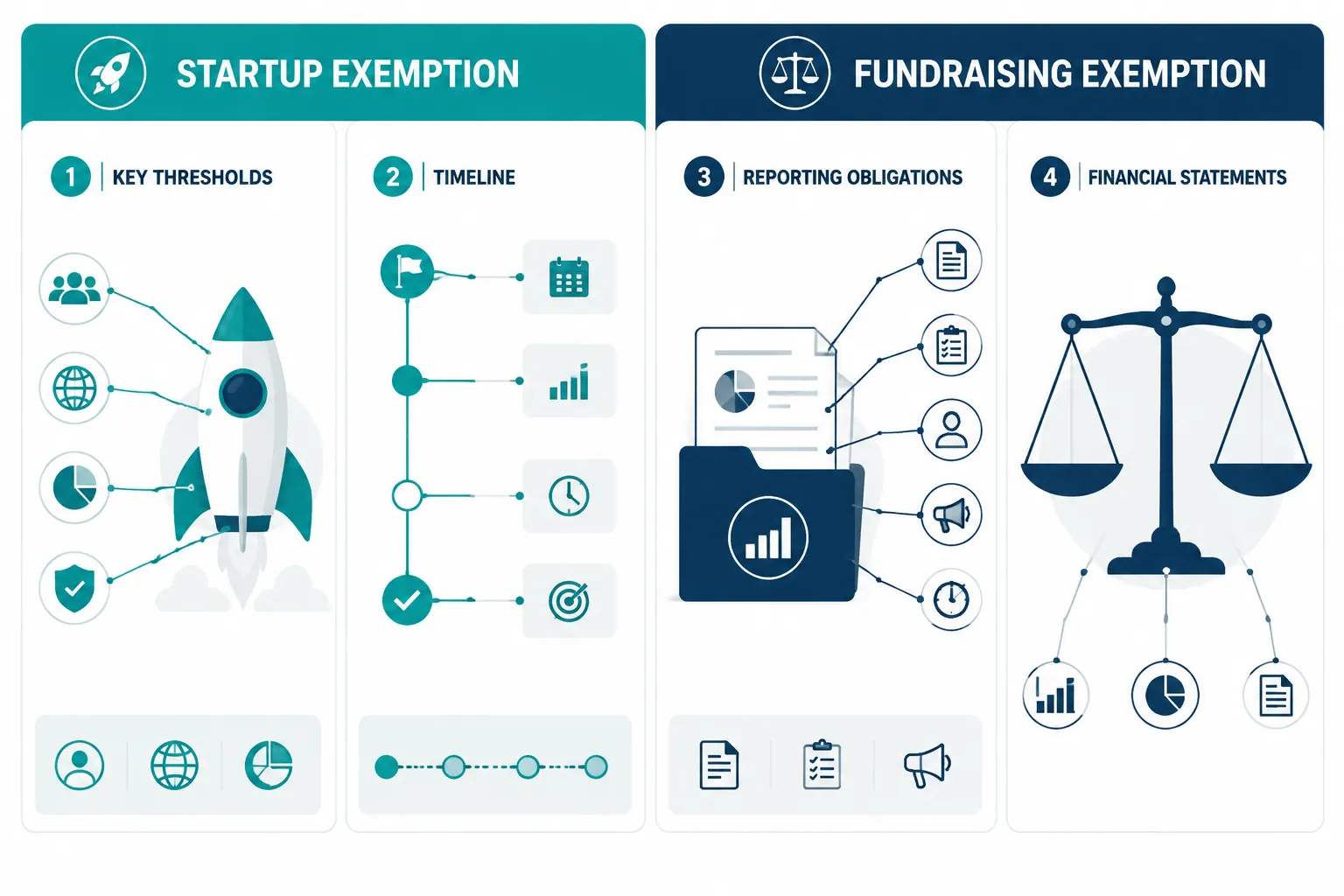
- Startup Exemption: Issuers can raise up to USD 5 million over a four-year period without full Securities Act registration. This tier targets early-stage crypto projects that cannot yet meet the disclosure burden of a registered offering [1][3][5].
- Fundraising Exemption: Issuers can raise up to USD 75 million within any 12-month period. This tier requires audited or reviewed financial statements and ongoing reporting obligations, making it suited for more established projects [1][5][6].
- Conditional Safe Harbor: A separate mechanism under which a crypto asset can eventually stop being treated as part of an “investment contract”, and therefore exit SEC jurisdiction, once issuers certify that all essential managerial efforts have been completed or permanently ceased [1][3][7].
Both exemptions require principles-based narrative disclosures rather than rigid form-based filings, giving issuers more flexibility while still protecting investors through antifraud provisions [3][4].
Common mistake: Some projects assume that qualifying for an exemption means they are free from all SEC oversight. Commissioner statements from both Chair Atkins and Commissioner Peirce make clear that antifraud and antimanipulation enforcement applies fully to exempt offerings [2][3].
What Caused Bitcoin to Rally in August 2026
Bitcoin’s August 2026 rally was driven by a combination of regulatory clarity signals and broader macroeconomic tailwinds. The SEC’s announcement on August 18 contributed directly to a market-wide price increase, with Bitcoin and Ethereum both rising on August 19, 2026 [9].
Additional factors supporting the rally included:
- Treasury expansion of long-end buybacks, which improved liquidity conditions [8].
- Regulators across multiple agencies signaling a shift toward clearer, rules-based frameworks rather than enforcement-first approaches [8][10].
- Growing market confidence tied to the Clarity Act discussions and SEC Chair Paul Atkins’ public statements on crypto policy [10].
The convergence of these signals reduced perceived regulatory risk, which historically correlates with increased crypto market activity and price appreciation.
SEC Crypto Exemption Rules vs. Current Regulations: What Changed
Before this proposal, crypto projects seeking to raise capital in the US had no dedicated exemption pathway. They either pursued full Securities Act registration (costly and complex), relied on existing Regulation D or Regulation A+ exemptions designed for traditional securities, or risked enforcement action [4][5].
| Feature | Previous Framework | Proposed Regulation Crypto Assets |
|---|---|---|
| Dedicated crypto pathway | None | Yes, tailored framework |
| Offering cap (small issuers) | Reg CF: USD 5M/year | USD 5M over four years |
| Offering cap (larger issuers) | Reg A+: USD 75M/year | USD 75M per 12 months |
| Disclosure format | Form-based, rigid | Principles-based narrative |
| Path to non-security status | None defined | Conditional safe harbor |
| Antifraud liability | Applies | Still applies fully |
The most significant change is the conditional safe harbor, which gives crypto projects a defined exit ramp from securities classification, something that did not exist under prior rules [1][7].
Which Cryptocurrencies and Projects Qualify for the New SEC Exemptions
The exemptions apply to “covered investment contracts involving crypto assets”, a specific legal category, not all digital assets broadly [1][4]. Projects that benefit most are those that:
- Are raising capital through token sales or similar mechanisms in the US.
- Can demonstrate that their token constitutes an “investment contract” under securities law and thus falls within the rule’s scope.
- Have the operational capacity to provide principles-based disclosures and, for the fundraising exemption, audited financial statements.
Projects that benefit most from these exemptions:
- Early-stage DeFi protocols conducting token launches.
- Layer-1 and Layer-2 blockchain projects raising development capital.
- Infrastructure projects where tokens are sold to fund network buildout.
Projects less affected:
- Fully decentralized networks where no central issuer exists (Bitcoin itself is the clearest example, it does not involve an ongoing investment contract in the traditional sense).
- Stablecoins backed 1:1 by fiat, which face separate regulatory treatment.
The conditional safe harbor is particularly valuable for projects that start centralized but plan to decentralize over time, as it provides a defined process for exiting securities classification once managerial control is genuinely relinquished [3][7].
When Do the New SEC Crypto Exemption Rules Take Effect
The rules proposed on August 18, 2026 are not yet final. The SEC has released them as a proposed rulemaking (file number S7-2026-27), which opens a public comment period before any final adoption [4].
Key timeline considerations:
- Comment period: Stakeholders, including exchanges, issuers, and investors, can submit formal comments to the SEC following publication in the Federal Register.
- Final rule adoption: The SEC must review comments, potentially revise the proposal, and vote to adopt a final rule. This process typically takes several months to over a year.
- Effective date: Final rules generally include an effective date after publication, allowing market participants time to comply.
Bottom line: No compliance obligations under “Regulation Crypto Assets” exist yet. However, projects planning capital raises should monitor the comment period and begin internal compliance reviews now.
How to Comply with New SEC Crypto Exemption Requirements
Compliance preparation should begin before the rules are finalized. The steps below apply to issuers evaluating whether to use either exemption once adopted.
For the Startup Exemption (up to USD 5 million over four years):
- Confirm that the token offering constitutes a “covered investment contract” under the proposed definition.
- Prepare principles-based narrative disclosures covering the project’s purpose, risks, and use of proceeds.
- Track cumulative offering amounts across the four-year window to stay within the cap.
- Ensure all antifraud obligations are met, these are not waived by the exemption [3].
For the Fundraising Exemption (up to USD 75 million per 12 months):
- Engage an auditor to prepare financial statements meeting SEC requirements.
- Establish ongoing reporting processes to satisfy post-offering obligations.
- Maintain records supporting the principles-based disclosures provided to investors.
- Monitor the 12-month rolling window for offering amounts.
For the Conditional Safe Harbor:
- Issuers must certify to the SEC that all essential managerial efforts promised to investors have been completed or permanently ceased [2][7].
- Legal counsel should review whether the network has achieved genuine decentralization before pursuing this pathway.

Which Crypto Exchanges Are Affected by the New SEC Exemptions
Exchanges are affected indirectly but significantly. If more crypto assets qualify as exempt securities rather than unregistered securities, exchanges listing those assets face clearer compliance expectations [5][6].
Specifically:
- US-registered exchanges and broker-dealers may need to update listing standards to account for tokens issued under the new exemptions.
- Offshore exchanges serving US customers remain subject to existing securities laws for any tokens that qualify as investment contracts.
- Decentralized exchanges (DEXs) face ongoing regulatory ambiguity, as the proposal does not directly address trading venue obligations.
The broader effect is that exchanges gain more certainty about which tokens carry securities-law obligations, reducing the legal risk of listing tokens that later face enforcement action.
Do Investors Need to Register Their Crypto Holdings Under the New SEC Rules
No. The new exemption rules address issuer obligations for selling crypto assets to the public, not investor obligations for holding them [1][4]. Individual investors do not register holdings with the SEC under these rules.
However, investors should be aware of two practical implications:
- Investor protections remain: Antifraud provisions protect investors in exempt offerings, so issuers cannot misrepresent material facts even without full registration [3].
- Accredited investor requirements may apply: Depending on how final rules are structured, certain exemption tiers may restrict participation to accredited investors, similar to existing Regulation D offerings.
Are the New SEC Exemptions Good or Bad for Crypto Investors
The proposal is broadly positive for investors, with important caveats. Greater regulatory clarity reduces the risk of sudden enforcement actions that can devastate token prices. The principles-based disclosure requirements give investors more consistent information about projects raising capital [3][5].
Potential benefits:
- More legitimate projects can raise capital legally in the US, expanding the quality of available investments.
- Antifraud protections remain fully intact, maintaining investor recourse against deceptive issuers.
- The safe harbor pathway incentivizes genuine decentralization, which can align issuer and investor interests over time.
Potential concerns:
- Principles-based disclosures may vary widely in quality, making comparison across projects difficult.
- The USD 5 million startup exemption cap is relatively low, which may push some projects to raise offshore anyway.
- Rules are not yet final; relying on them before adoption carries risk.
Conclusion: What to Do Now as SEC Proposes New Crypto Exemption Rules Amidst Bitcoin’s August 2026 Rally
The SEC’s proposal of “Regulation Crypto Assets” on August 18, 2026 marks a meaningful shift from enforcement-first crypto policy toward a structured, rules-based framework. For the first time, crypto projects have a defined path to raise capital legally in the US and, eventually, to exit securities classification entirely through the conditional safe harbor [1][7].
The timing, arriving as Bitcoin’s August 2026 rally lifted the broader market, amplified the proposal’s impact on investor sentiment [9]. But the rules are not yet final, and the gap between a proposed rule and an adopted one is significant.
Actionable next steps:
- Issuers and project teams: Engage securities counsel now to assess whether your token qualifies as a covered investment contract and which exemption tier fits your capital needs.
- Crypto exchanges: Review current listing standards and begin mapping tokens on your platform against the proposed framework.
- Investors: Monitor the SEC comment period and watch for final rule adoption before making decisions premised on the new framework.
- All stakeholders: Submit comments to the SEC during the public comment period to shape how the final rules are written.
The proposal represents a real opportunity to bring more of the crypto economy into a legitimate, investor-protected framework. Acting early, not waiting for final rules, is the most effective way to stay ahead of compliance obligations.
Frequently Asked Questions
What is “Regulation Crypto Assets”? It is a proposed SEC rulemaking released on August 18, 2026, that creates a tailored offering regime for “investment contracts involving crypto assets” under the Securities Act of 1933, including two registration exemptions and a conditional safe harbor [1][4].
What is the startup exemption cap? The startup exemption allows offerings of up to USD 5 million over a four-year period for early-stage crypto projects [1][3].
What is the fundraising exemption cap? The fundraising exemption permits offerings of up to USD 75 million during each 12-month period, subject to financial statement and reporting requirements [1][5].
Are these rules already in effect? No. As of August 2026, these are proposed rules open for public comment. They are not yet adopted or enforceable [4].
Does the safe harbor mean a crypto asset is no longer regulated? Not entirely. The conditional safe harbor removes an asset from investment contract classification under securities law, but other laws (commodities, banking, tax) may still apply [2][7].
Do antifraud rules still apply to exempt offerings? Yes. Both exemptions are from registration requirements only. Federal antifraud and antimanipulation provisions apply fully to all exempt offerings [3][7].
Why did Bitcoin rise after the SEC announcement? Bitcoin and Ethereum prices rose on August 19, 2026, as markets interpreted the proposal as a sign of regulatory clarity and reduced enforcement risk [9].
Who can submit comments on the proposed rules? Any member of the public, including investors, exchanges, issuers, and legal professionals, can submit formal comments to the SEC during the open comment period following Federal Register publication [4].
Does this affect Bitcoin directly? Bitcoin itself is generally not considered an investment contract, so the exemptions do not directly apply to Bitcoin. The rally reflects market sentiment about reduced regulatory uncertainty broadly [8][10].
What is the biggest practical change for crypto projects? The conditional safe harbor is the most significant change, it provides a defined legal process for crypto projects to eventually exit securities classification, which had no equivalent under prior rules [1][7].
References
[1] SEC Proposes New Regulation Crypto Assets – https://www.sec.gov/newsroom/press-releases/2026-76-sec-proposes-new-regulation-crypto-assets
[2] Atkins Statement Regulation Crypto Assets 081826 – https://www.sec.gov/newsroom/speeches-statements/atkins-statement-regulation-crypto-assets-081826
[3] Peirce Statement Regulation Crypto Assets 081826 – https://www.sec.gov/newsroom/speeches-statements/peirce-statement-regulation-crypto-assets-081826
[4] S7-2026-27 Proposed Rule – https://www.sec.gov/rules-regulations/2026/08/s7-2026-27
[5] SEC Proposes Some Registration Exemptions For Crypto Offerings – https://www.bloomberg.com/news/articles/2026-08-18/sec-proposes-some-registration-exemptions-for-crypto-offerings
[6] SEC Unveils Crypto Plan – https://finance.yahoo.com/markets/crypto/articles/sec-unveils-crypto-plan-agency-195312113.html
[7] Uyeda Statement Regulation Crypto Assets 081826 – https://www.sec.gov/newsroom/speeches-statements/uyeda-statement-regulation-crypto-assets-081826
[8] Crypto Market Advances As Treasury Expands Long End Buybacks And Regulators Signal Clarity – https://www.cryptotimes.io/2026/08/20/crypto-market-advances-as-treasury-expands-long-end-buybacks-and-regulators-signal-clarity/
[9] Bitcoin And Ethereum Prices Today Wednesday August 19 2026 – https://finance.yahoo.com/personal-finance/investing/article/bitcoin-and-ethereum-prices-today-wednesday-august-19-2026-crypto-prices-rise-after-sec-announces-proposed-regulation-161733939.html
[10] Crypto SEC Bitcoin BTC Paul Atkins Clarity Act – https://www.tradingkey.com/analysis/cryptocurrencies/btc/262117982-crypto-sec-bitcoin-btc-paul-atkins-clarity-act-tradingkey