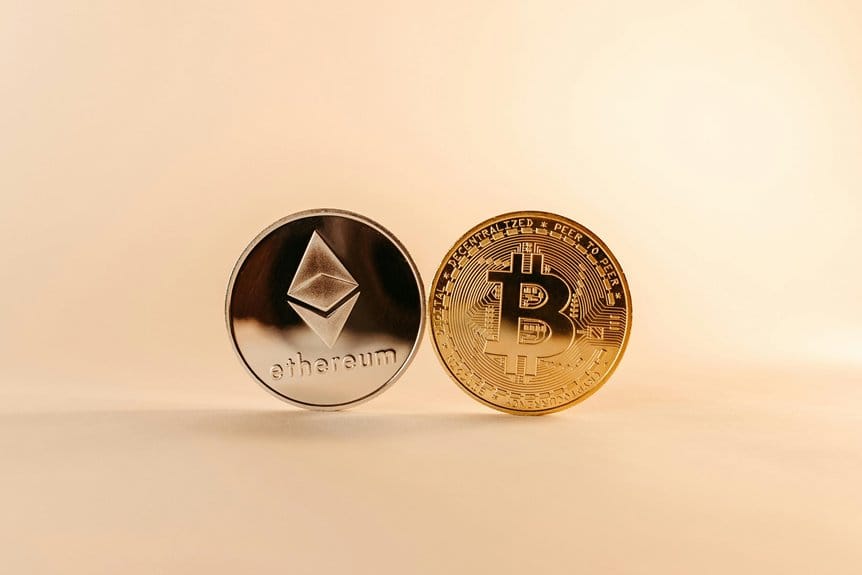
Ethereum's blockchain platform serves as the foundational infrastructure for decentralized finance (DeFi) through its robust smart contract capabilities. These self-executing programs automate financial operations, eliminating intermediaries while ensuring transparent, trustless transactions. Key DeFi protocols built on Ethereum, including Uniswap and Aave, enable lending, trading, and yield farming opportunities through automated market makers and dynamic interest rate mechanisms. The platform's standardized token protocols (ERC-20, ERC-721) facilitate asset tokenization and market accessibility, while governance tokens empower community-driven development. Despite gas fee challenges, Ethereum's ecosystem continues to evolve with Layer-2 solutions and cross-chain compatibility. Understanding these core mechanisms reveals DeFi's transformative potential in modern finance.
Understanding Smart Contracts
Smart contracts serve as the foundational building blocks of Ethereum's decentralized applications, operating as self-executing programs that automatically enforce predefined rules and conditions on the blockchain. These immutable pieces of code eliminate the need for intermediaries while ensuring transparent and trustless transactions between parties, fundamentally transforming how digital agreements are implemented and executed.
The automated execution capabilities of smart contracts enable complex financial operations to occur without manual intervention, reducing both operational friction and potential human error. When deployed on Ethereum's network, these contracts execute precisely as programmed, managing everything from simple token transfers to sophisticated lending protocols and automated market makers.
Smart contract auditing plays a crucial role in ensuring the security and reliability of these autonomous systems. Through rigorous code review and testing processes, auditors verify the contract's logic, identify potential vulnerabilities, and validate the intended functionality.
This systematic approach to security helps protect users' assets and maintains the integrity of decentralized finance protocols. The standardization of smart contract development practices, combined with comprehensive auditing procedures, continues to strengthen the foundation of Ethereum's ecosystem.
Key DeFi Protocols on Ethereum
The Ethereum network hosts several prominent DeFi protocols that have revolutionized traditional financial services through decentralized implementation.
Leading decentralized exchanges like Uniswap and SushiSwap utilize automated market maker systems with liquidity pools, enabling users to trade assets without traditional intermediaries. These protocols incorporate governance tokens, allowing stakeholders to participate in protocol development and decision-making processes.
Lending platforms such as Aave and Compound have established sophisticated borrowing and lending mechanisms, featuring dynamic interest rates and collateralization systems.
These protocols leverage stablecoin integration to maintain price stability and reduce volatility risks in lending operations. Cross chain compatibility has become increasingly important, with protocols developing bridges and interoperability solutions to connect with other blockchain networks.
The evolution of user experience in DeFi protocols continues to improve through enhanced interfaces and simplified transaction processes.
Community involvement plays a crucial role in protocol development, with active governance participation and continuous feedback driving protocol upgrades.
These protocols maintain security through rigorous auditing processes and implement risk management features to protect users' assets while facilitating decentralized financial operations.
Tokenization and Digital Assets
Widely adopted across Ethereum's ecosystem, tokenization enables the creation of digital representations for both tangible and intangible assets through standardized protocols like ERC-20 and ERC-721.
These token standards provide the framework for asset ownership verification, transfer mechanisms, and interoperability across various DeFi platforms. Through smart contracts, traditional assets can be converted into digital tokens, enabling fractional ownership and improved market accessibility.
The implementation of tokenization has revolutionized asset management by introducing governance tokens that grant voting rights and decision-making power within decentralized protocols.
These digital assets can be efficiently traded through automated liquidity pools, enhancing market depth and reducing friction in transactions. Asset interoperability enables seamless movement between different protocols and platforms, creating a more integrated financial ecosystem.
However, tokenization faces regulatory challenges, particularly concerning securities laws and compliance requirements.
Digital identity verification and KYC protocols are becoming increasingly important as the sector matures. Despite these hurdles, tokenization continues to evolve, supporting new use cases from real estate tokenization to intellectual property rights management, fundamentally reshaping how assets are owned, traded, and managed in the digital economy.
Yield Farming Opportunities
Consistently evolving within DeFi ecosystems, yield farming represents a sophisticated investment strategy where users deploy their digital assets across various protocols to maximize returns through lending, liquidity provision, and token incentives.
Through strategic platform comparison and risk assessment, participants can identify optimal opportunities across multiple DeFi protocols while maintaining prudent asset diversification.
Liquidity mining programs offer participants governance tokens and additional rewards for contributing to protocol liquidity pools. These incentive structures vary significantly between platforms, necessitating thorough analysis of reward distribution mechanics and potential impermanent loss exposure.
Strategy optimization involves monitoring APY fluctuations, gas costs, and protocol-specific risks while maintaining a balanced portfolio approach.
The complexity of yield farming operations demands robust user experience considerations, as participants must navigate multiple platforms, track rewards, and adjust positions based on market conditions.
Successful yield farmers typically employ automated tools for portfolio management and real-time analytics, enabling efficient capital allocation across various opportunities while maintaining risk parameters within acceptable thresholds.
This systematic approach to DeFi yield generation requires continuous monitoring and strategy refinement.
Ethereum Gas and Transaction Fees
Gas fees represent a fundamental component of Ethereum's economic model, functioning as the computational cost metric for executing transactions and smart contract operations on the network. These fees fluctuate based on network congestion and the complexity of operations being executed, directly impacting transaction scalability and overall blockchain efficiency.
The implementation of fee estimation algorithms helps users determine optimal gas prices for their transactions, though during periods of high network activity, gas wars can emerge as users compete for transaction prioritization. This competition often results in elevated costs, particularly affecting complex smart contract interactions and DeFi operations that require multiple transaction steps.
To address these challenges, various gas optimization techniques have emerged, including transaction batching, optimal contract design, and the strategic timing of operations during lower-congestion periods.
The introduction of EIP-1559 has brought a more predictable fee structure, improving user experience through a base fee and priority fee mechanism. However, sustained high gas fees during peak usage continue to present scalability challenges for Ethereum's ecosystem, driving ongoing development of Layer 2 solutions and network upgrades focused on improving transaction efficiency.
Security Risks and Solutions
Numerous security risks inherent to Ethereum's decentralized architecture and smart contract functionality require robust mitigation strategies to protect users and assets.
Primary defense mechanisms include comprehensive audit processes conducted by specialized firms that scrutinize smart contract code for potential vulnerabilities. These vulnerability assessments systematically evaluate attack vectors, implementation flaws, and potential exploits within the protocol infrastructure.
Risk management frameworks incorporate multiple security protocols, including multi-signature requirements, time-locked transactions, and automated monitoring systems. Insurance solutions have emerged to provide coverage against smart contract failures, while fraud prevention measures utilize advanced analytics to detect suspicious patterns and potential security breaches.
Regulatory compliance measures are increasingly integrated into DeFi protocols to align with evolving financial regulations and reporting requirements.
User education remains critical in maintaining security integrity, as human error and insufficient understanding of security best practices often contribute to breaches. Projects implement mandatory security training modules and documentation to ensure users comprehend essential security protocols.
Additionally, automated security tools continuously monitor network activity, providing real-time threat detection and response capabilities across the Ethereum ecosystem.
Market Impact and Growth
The explosive growth of Ethereum's decentralized finance ecosystem has fundamentally transformed digital asset markets, with total value locked (TVL) reaching unprecedented levels across lending protocols, decentralized exchanges, and yield aggregators. This expansion has been catalyzed by liquidity mining initiatives and the distribution of governance tokens, which have incentivized widespread participation while introducing new market dynamics and volatility patterns.
Ecosystem collaboration among major DeFi protocols has accelerated institutional adoption, particularly as scaling solutions address previous network constraints. Layer-2 implementations and cross-chain integration capabilities have enhanced transaction throughput and reduced costs, making DeFi more accessible to traditional finance participants.
However, regulatory challenges continue to impact market development, especially regarding compliance frameworks and risk management protocols.
The maturation of DeFi markets has led to sophisticated financial instruments and yield optimization strategies, attracting significant capital inflows from both retail and institutional investors. This growth trajectory has established Ethereum as the dominant smart contract platform for decentralized finance, despite emerging competition from alternative blockchain networks.
The ecosystem's resilience through market cycles demonstrates its potential for sustained expansion and innovation.
Future of DeFi Infrastructure
Scaling solutions represent a foundational pillar for DeFi's architectural evolution, building upon current market momentum to address next-generation infrastructure requirements.
As protocols mature, cross chain interoperability emerges as a critical framework enabling seamless asset transfers and unified liquidity provision across multiple blockchain networks. This infrastructure development coincides with enhanced decentralized identity systems, establishing robust verification mechanisms while preserving user privacy.
Protocol upgrades are increasingly focusing on optimizing governance models, implementing sophisticated voting mechanisms and delegation frameworks that balance efficient decision-making with decentralized control.
These improvements directly impact user adoption rates, as simplified interfaces and reduced transaction costs lower barriers to entry. The infrastructure roadmap must address regulatory challenges through compliance-oriented protocol designs while maintaining DeFi's core principles of permissionless access.
Community engagement remains central to infrastructure development, with decentralized autonomous organizations (DAOs) coordinating technical improvements and resource allocation.
The next phase of DeFi infrastructure will likely emphasize modular architecture, allowing protocols to specialize in specific functions while maintaining interconnectivity through standardized interfaces and cross-chain communication channels.
Frequently Asked Questions
How Do I Explain Ethereum and Defi to My Non-Tech-Savvy Family Members?
Explain blockchain basics as digital record-keeping, like a shared spreadsheet everyone can see. DeFi benefits include financial services without banks, allowing direct lending, borrowing, and trading through Ethereum's technology platform.
Can Traditional Banks Integrate With Ethereum-Based Defi Platforms?
Traditional banks can integrate with DeFi through bank partnerships, though regulatory challenges remain significant. Implementation requires compliance frameworks, secure custody solutions, and approved interfaces between legacy systems and blockchain protocols.
What Qualifications Do I Need to Start Developing on Ethereum?
Essential qualifications include proficiency in programming languages like Solidity, understanding blockchain fundamentals, familiarity with smart contracts development, and experience with developer tools like Truffle, Hardhat, and Web3.js.
How Does Ethereum's Energy Consumption Compare to Traditional Financial Systems?
Ethereum's transition to proof-of-stake significantly improved energy efficiency, reducing consumption by 99.9%. Current energy sustainability metrics indicate substantially lower resource demands compared to traditional banking infrastructure's operational footprint.
Are There Any Government-Backed Defi Projects Running on Ethereum?
While several governments explore DeFi initiatives, regulatory challenges have limited direct government-backed projects on Ethereum. Most state-led blockchain endeavors opt for permissioned networks rather than public Ethereum infrastructure.
Conclusion
Ethereum's foundational role in decentralized finance continues to evolve through advanced smart contract capabilities, protocol innovations, and expanding DeFi use cases. Despite scalability challenges and gas fee considerations, the network's robust infrastructure enables complex financial instruments and automated market-making mechanisms. As layer-2 solutions emerge and cross-chain interoperability advances, Ethereum remains central to DeFi's expansion, market efficiency, and mainstream adoption of decentralized financial services.